

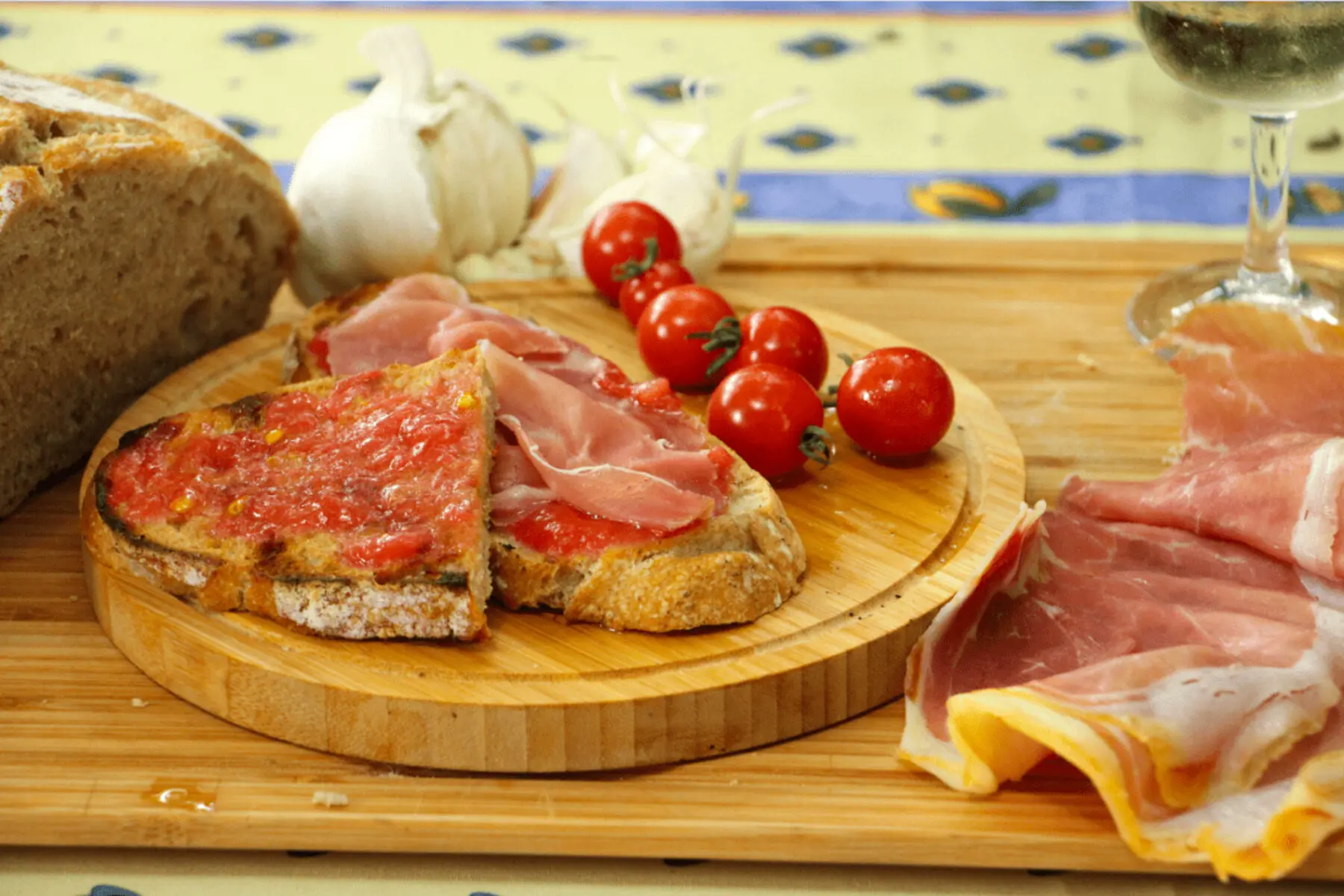
This fast, simple recipe for wood fired pan con tomate will become the most popular thing you serve at an outdoor gathering. Four ingredients, five minutes, and a fire — and people will keep coming back until the bread runs out.
❤️ Why You’ll Love This Wood Fired Pan con Tomate
- Four ingredients, five minutes. Bread, garlic, tomato and olive oil — no shopping list, no prep the night before.
- Built for a crowd. Toast a few slices, dress them, hand them out, and keep the next batch coming — nobody stands around hungry.
- Works over any fire. A grate over coals, a toast rack, even a hot barbecue or grill pan at home — you do not need a wood fire to make it well.
- Genuinely authentic. This is the real Catalan tapa, not a camp-cooking shortcut version of it.
- Endlessly adaptable. Leave off the ham for a vegetarian appetizer, add it for something heartier — the base recipe barely changes either way.
- Almost nothing to clean up. One grate, a knife and your hands — this is about as low-effort as fire cooking gets.
My father-in-law was raised in Spain, in the Balearic Islands, and he is the one who introduced me to pan con tomate — bread with tomato, the classic of Spanish tapas bars and especially of Catalonia. It is mind-boggling in its simplicity and out of this world in taste, and it genuinely benefits from being made over a fire: the slight bitterness of the toast balances the sweet acidity of the tomato perfectly.
🍅 What Goes Into Pan con Tomate
- Bread — the most important ingredient by a wide margin. I use my own.
- Garlic — the more the better.
- Tomatoes — fresh is best, though good quality canned tomatoes will do in a pinch.
- Olive oil — the other ingredient that decides everything. Use the good stuff.
- Toppings — salt, or dry-cured ham.
🍞 What Type of Bread for Pan con Tomate?

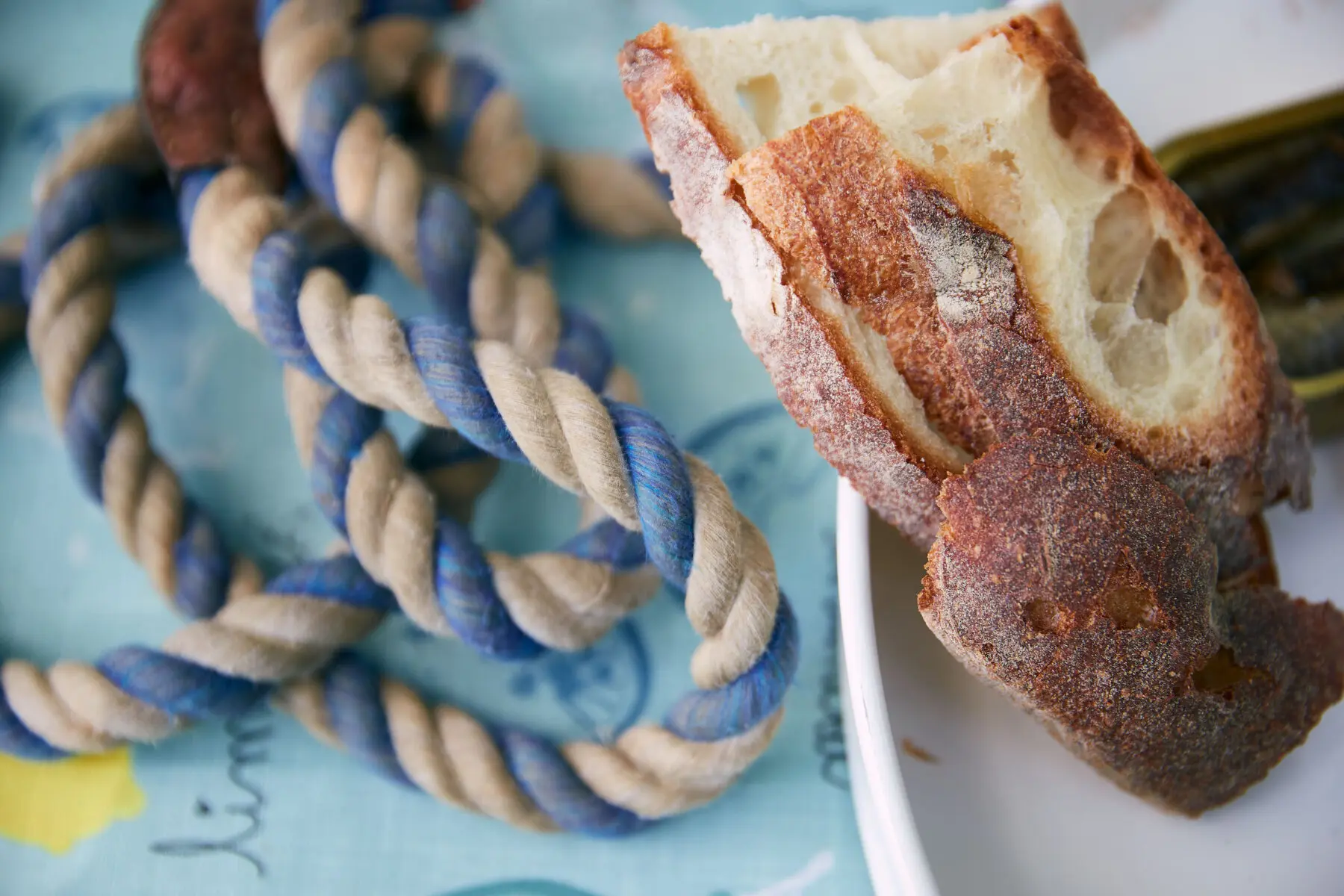
The bread is the ingredient that determines whether your pan con tomate can hold up to its reputation — literally and figuratively. It has to be a proper country loaf.
I will say this loudly: it is FORBIDDEN to use store-bought sliced white bread. Anything resembling Wonderbread has no business in this recipe.
Do not misunderstand me, I am not a bread snob. For a PB&J sandwich, Wonderbread is the best there is. But it is not strong enough for this. You want a crunchy crust and a moist yet firm inside, and you want the slices day-old rather than fresh — a little dryness helps the bread take the tomato without collapsing.
🔥 Assembling Your Famous Spanish Tapa
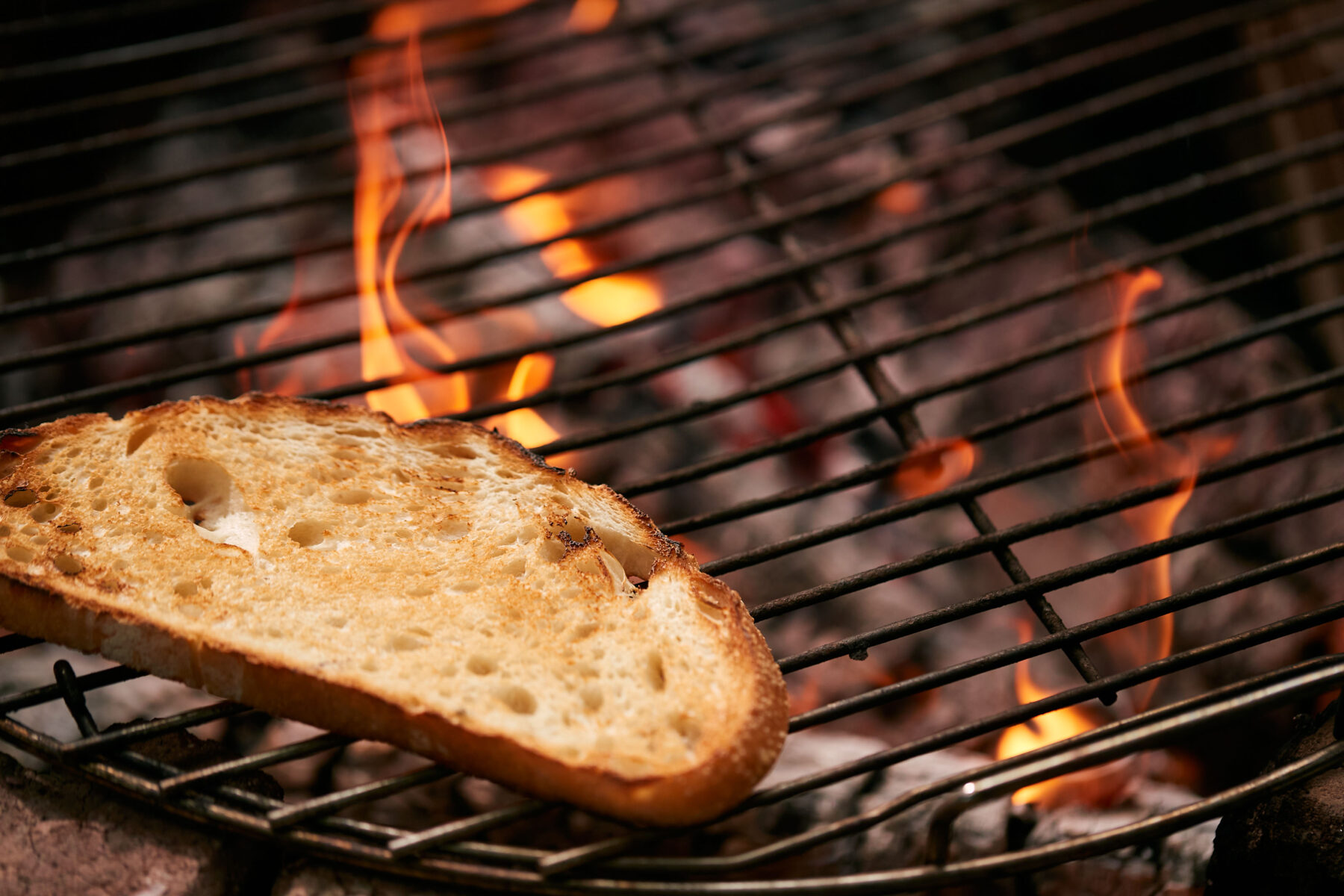
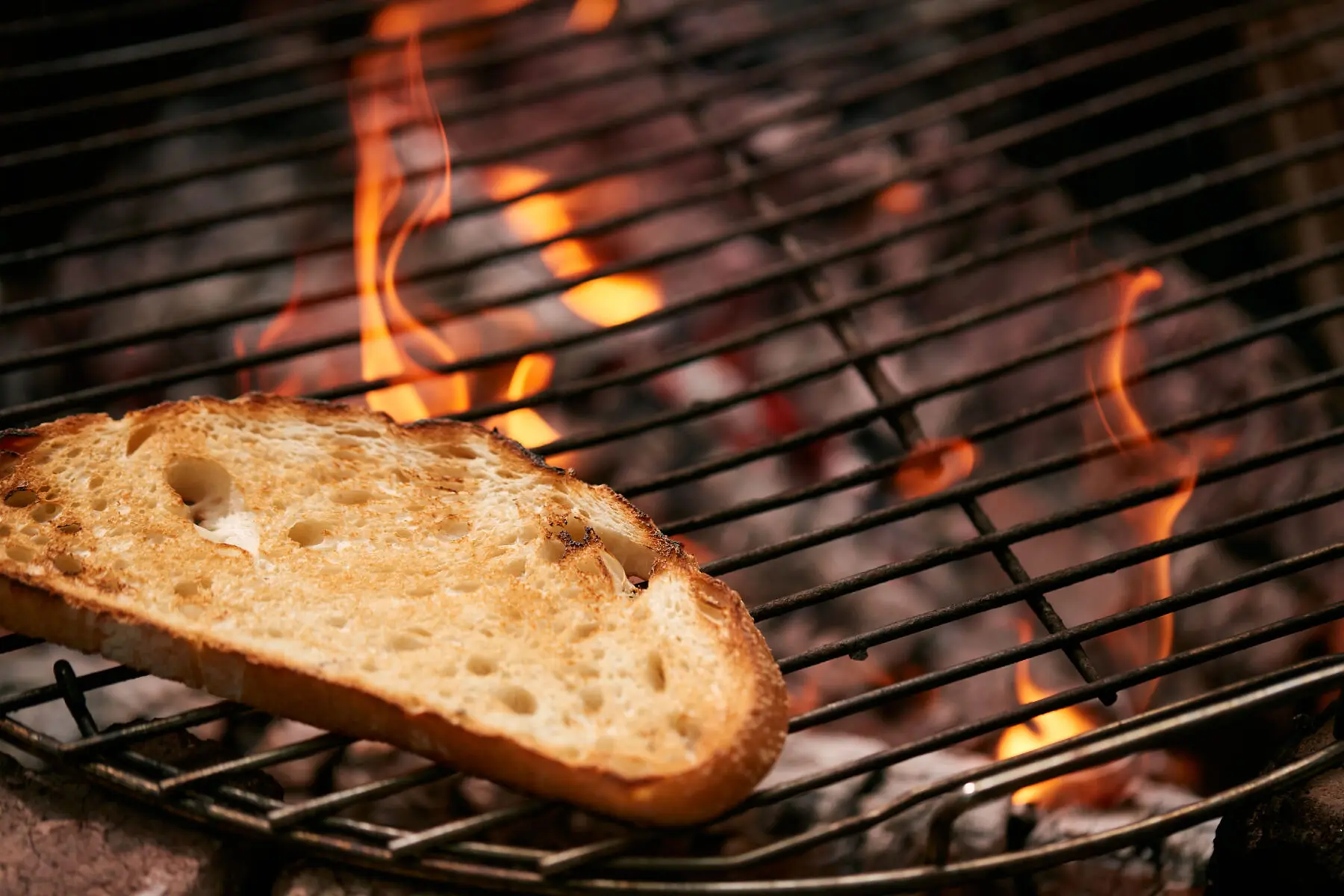
Now that you have the right bread, the rest is technique. Build a fire and let it get properly hot. Set a grate over it and toast the bread — toasted, not burnt, so work over indirect heat if you can.
Put it out properly once you are done — our guide walks through it step by step, and the U.S. Forest Service’s campfire safety guidance is worth reading before you start cooking over open fire regularly.
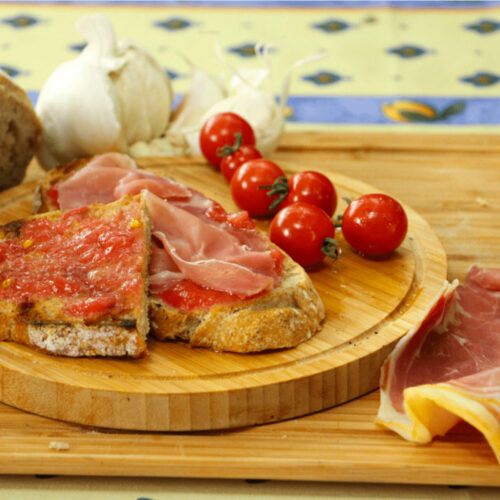
That toasted surface is what makes the next step work. Rub each slice with a raw garlic clove cut lengthwise; the rough crust acts like a grater. Your fingers will end up very garlicky. You can hold the clove in a paper towel to avoid it — I do not mind, so I go free finger.
The thin layer of garlic is also a barrier for the step that follows, which is literally squishing the tomato onto the bread. Not a thick layer — just enough to cover the whole surface.
Then the olive oil. There are two kinds: cooking olive oil and finishing olive oil. The latter is the good stuff and this is where it goes. My husband is a serious olive oil man, and specifically a Spanish olive oil man, so that is what we use.
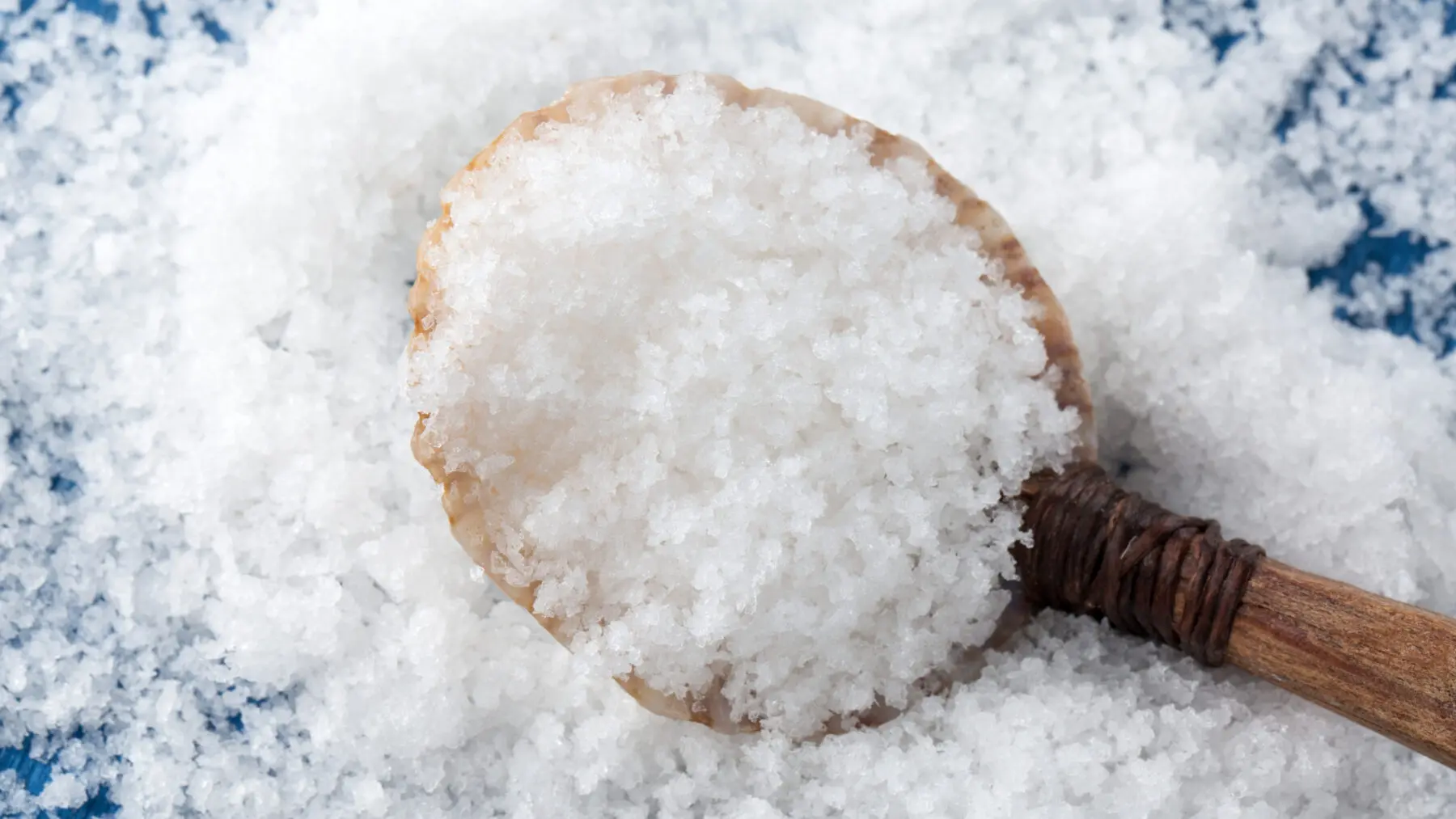
When I am feeling lazy I finish with salt — not table salt, your dish deserves better. Fleur de sel: big, crunchy, and oddly less salty than table salt. When I am feeling fancy, dry-cured ham. Spanish Serrano is the right answer, Ibérico is the better one, and prosciutto is an excellent substitute.

🧑🍳 Manon’s Tips for Wood Fired Pan con Tomate
- Wait for a bed of coals, not flames. A fierce, flaming fire blackens the bread before the inside even warms through — let it burn down first, or work over indirect heat if it is still roaring.
- Day-old bread is not optional. Fresh bread turns to mush the moment the tomato hits it. If yours is fresh, leave it out uncovered for a few hours first.
- One clove goes further than you think. The toasted crust limits how much garlic actually sticks — you will not over-garlic four slices with a single clove.
- Rub, do not spread. Crush the tomato wedge into the bread instead of smearing it on top; a thin, even layer beats a thick, sloppy one.
- Save your best olive oil for this. A finishing oil, not a cooking oil — this is the one dish where the difference is obvious in a single bite.
- Assemble to order. Toast a few slices at a time and dress them right before they are eaten; a stack of pre-made pan con tomate goes soggy fast.
🇪🇸 We Could Not Find a Good Pan con Tomate in Barcelona
A few years ago I was lucky enough to go to Spain for my husband’s birthday. We went to Barcelona, the city he was born in. It is one of the most beautiful cities I have ever visited — so much history.
We would walk all day and finish with tapas. You have to understand how enormous pinchos are in Spain: you go to a tapas bar, you drink some wine, you eat small things standing up.
And believe it or not, we did not find a single tapas bar serving a decent pan con tomate. So enjoy this recipe. It is the best one you will ever have.
🍽️ How to Serve
Serve it the second it is assembled, while the toast is still warm and the oil is still glossy. It is an appetizer, so put it out on a board and let people take it with their hands, standing around the fire with a glass of something cold.
If you are making it a proper spread: add olives, Manchego, a bowl of almonds, and thin slices of Serrano alongside.
Or use it as the opening act before something heartier off the same fire — a campfire steak or a tray of ember roasted vegetables both follow it well.
🔄 Variations and Swaps
- No garlic on hand. Skip it — the tomato and good olive oil still carry the dish, you will just lose a little bite.
- Out of fresh tomatoes. A good canned tomato, well drained and crushed, beats a pale, out-of-season fresh one every time.
- Rub or grate. Rubbing a cut wedge onto the toast is the campfire way; grating the tomatoes into a bowl and spooning the pulp on is faster for a crowd.
- Skip the ham for vegetarian. Fleur de sel alone is the traditional, simpler version — add Serrano, Ibérico or prosciutto only if you want something heartier.
- No fire tonight. A grill pan, a barbecue or a hot oven toasts the bread nearly as well; you lose the smoke, but the rest of the dish holds up.
❄️ Storage
There is nothing to store, and that is by design. Assembled pan con tomate is finished within minutes. If you want to get ahead, grate the tomatoes into a bowl and keep them covered in the cooler for a few hours — but toast and assemble at the last second.
Wood Fired Pan con Tomate
Equipment
- 1 fire grate or toast rack
Ingredients
The four that matter
- 4 slices day-old country bread cut thick — never sliced sandwich bread
- 1 clove garlic cut in half lengthwise
- 1 large tomato ripe, cut into quarters
- good olive oil a finishing oil, Spanish if you have it
To finish
- fleur de sel to taste
- 4 slices Serrano or Iberico ham optional
Instructions
Toast
- Build a fire and let it burn down to a hot, even bed. Set a grate or a toast rack over it and grill both sides of the bread — toasted, not burnt. Work over indirect heat if the fire is fierce.
Build
- Rub each hot slice with the cut side of the raw garlic. The rough toasted crust acts like a grater. Hold the clove in a paper towel if you would rather not smell of garlic all evening.
- Rub a tomato wedge over each slice, crushing it into the bread so the pulp covers the whole surface. A thin layer, not a thick one.
- Drizzle generously with good olive oil.
- Sprinkle with fleur de sel, and drape over a slice of Serrano or Iberico ham if you are feeling fancy.
Serve
- Serve immediately, while the toast is still warm. Then prepare yourself to make it all over again, because everyone will ask for more.
Notes
- Rub or grate the tomato
- What bread to use if you cannot make your own
- Using canned tomatoes
- How much garlic is too much
- Which olive oil to buy
- Making it without a fire
- What to serve on top
- How many people it serves
- Prepping ahead for a crowd
❓ Frequently Asked Questions
Should I rub the tomato or grate it?
Both are traditional. Rubbing a cut wedge straight onto the toast is the campfire way and what I do here. Grating the tomatoes into a bowl and spooning the pulp on is tidier and better for a crowd.
What bread should I use if I cannot make my own?
Any proper country loaf: sourdough, ciabatta, a rustic white with an open crumb and a real crust. Day-old is better than fresh. Never sliced sandwich bread.
Can I use canned tomatoes?
Yes, if they are good ones. Drain them well and crush them onto the bread. Out of tomato season, a good canned tomato beats a pale fresh one every time.
How much garlic is too much?
There is no such thing, but the crust does the limiting for you — you can only rub so much onto a slice. One clove will comfortably do four slices.
Which olive oil should I buy?
A finishing oil, not a cooking oil. Spanish if you want to be faithful to the dish. It is the one place in this recipe where spending more is immediately obvious.
Can I make this without a fire?
Yes — a grill pan, a barbecue or even a toaster will get you there. You will lose the smoke, which is precisely the reason to do it over wood.
What do I serve on top?
Fleur de sel for the lazy version, Serrano or Ibérico ham for the fancy one. Prosciutto works beautifully. Anchovies, if that is your household.
How many people does this recipe serve?
As written, four slices — enough for four people as a starter. It scales in a snap: keep the ratio of one tomato and one garlic clove for every four slices of bread and multiply for the size of your crowd.
Can I get a head start on this for a crowd?
A little. Grate the tomatoes into a bowl and keep them covered in the cooler for a few hours ahead of time. Hold off on toasting and assembling until the moment you serve — the bread goes soft within minutes of meeting the tomato.