
You followed every step in Building a Fire, the flames did their thing, and now everyone around your site has a full belly and heavy eyelids. The logs have burned down to a soft orange glow, the conversation has gotten quiet, and you are ready to crawl into your sleeping bag. Here is the part nobody wants to think about: a fire that looks dead is not the same thing as a fire that is out. Buried embers can hold heat for a long time, and all it takes is one gust of wind to wake them back up. Putting your fire out properly takes maybe ten extra minutes. Skipping it can cost a lot more than that.
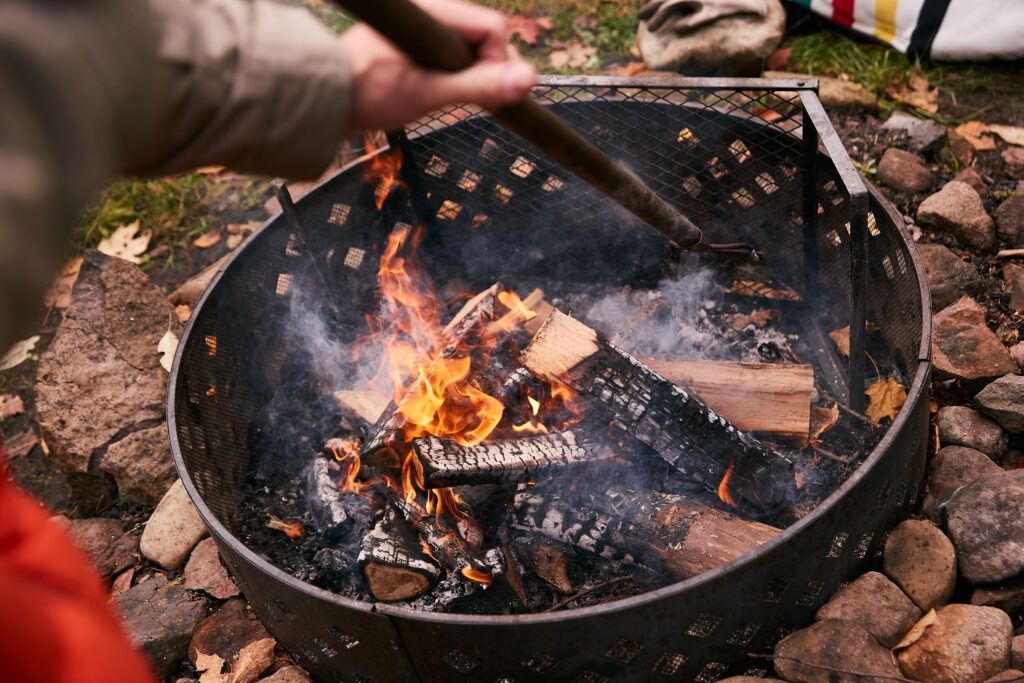
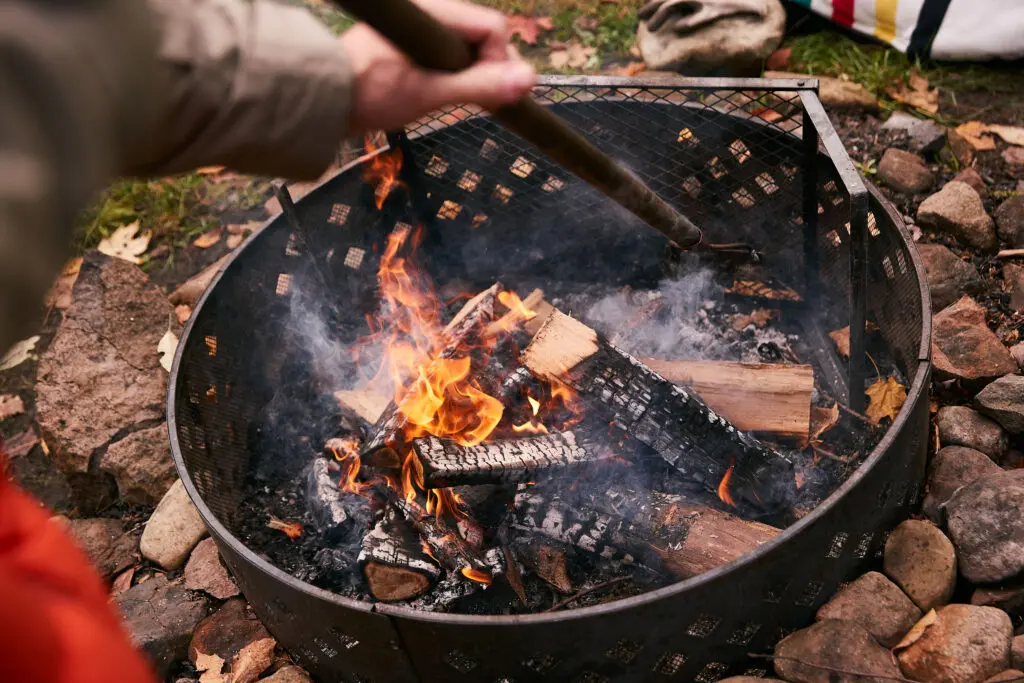
🔥 Why You Can’t Just Walk Away
If you are in your backyard with a proper containment system — a BBQ, a wood-fired oven, a kudu grill, a built-in fire pit — and you can close a lid on it or reach it with a garden hose, most of what follows does not apply to you in the same way. You still need to kill the heat, but you have got the tools right there. It is the open campfire, the one surrounded by dirt or rocks with nothing but sky above it, that needs real attention before you turn your back on it.
Wherever you are cooking, keep at least one fire extinguisher within arm’s reach, every single time. Not just for the campfire — for the moment a spark lands somewhere you did not expect it to.
You do not need much to do this right, but you do need it before the fire burns all the way down, not after:
A lot of water — a jug, a hose, a nearby lake or stream. A shovel or stick to stir with. Backup dirt or sand if water is limited. A pair of gloves, because you are about to get close to hot ash. And a fire extinguisher, just in case.
If you are missing any of these, sort it out before you build the fire in the first place, not while it is already burning down.
👣 The Forest Service Method, Step by Step
When I am at a campsite, I follow the official recommendations from the US Forest Service, and I would suggest you do too, even in your own backyard. It is the same method, done in order, every time:
- First, drown the campfire with water.
- Next, mix the ashes and embers with soil. Scrape any partially-burned sticks and logs to make sure the hot embers are off them.
- Stir the embers once they are covered with water, and make sure everything is wet.
- Feel the coals, embers, and any partially-burned wood with your hands. Everything, including the rock fire ring, should be cool to the touch. Feel under the rocks too — embers hide there.
- When you think you are done, take an extra minute and add more water anyway.
- Check the whole campsite one last time for sparks or embers. It only takes one to start a forest fire.
- If it is too hot to touch, it is too hot to leave.
Please take the time to do this properly. It genuinely can prevent a wildfire.
💧 Water or Sand: Which One Wins
Both methods work, and both have downsides.
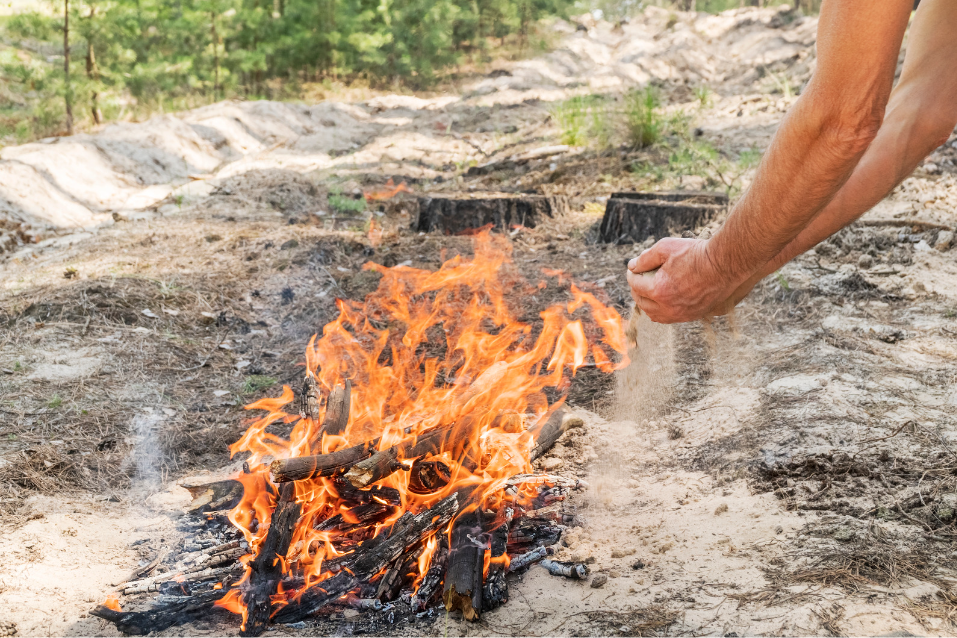
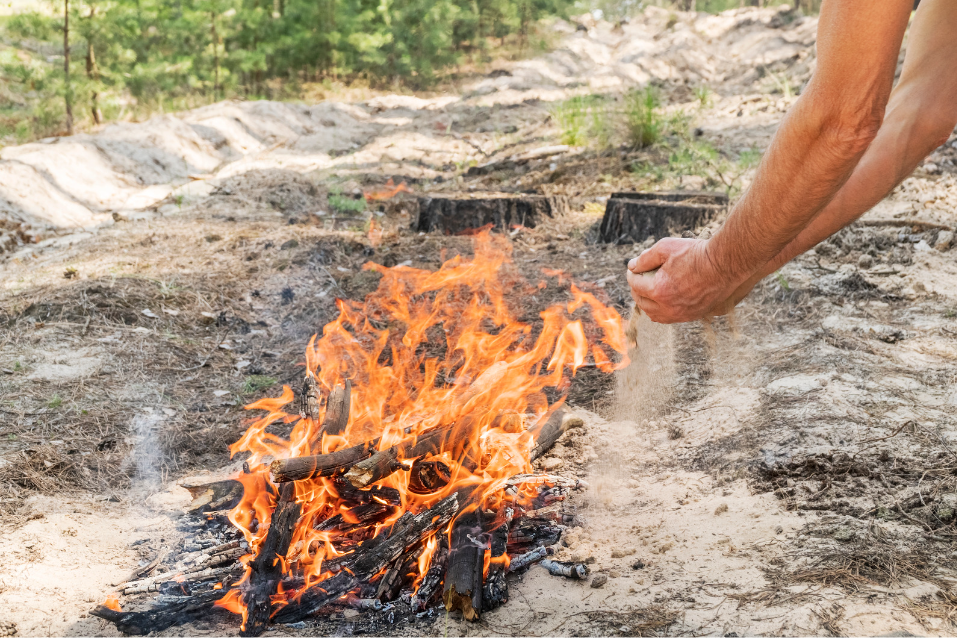
Water is great, but you need it on hand. In your backyard, that is your garden hose. At a campground with proper services, water is usually close by, but tent camping often does not give you that luxury. And you need a lot of it — enough that any logs left in the pit will be completely soaked, which means you will not be cooking over them again the next morning. If you are planning to build back up on the same coals for round two, that is worth knowing before you drown everything (my 2 Fire Cooking Methods guide gets into how you use a bed of coals in the first place).
Sand works too, but it is rarely as available, whether that is your backyard or a random campground. My other issue with sand: you are adding a layer every time you put out a fire, and by the end of a week of camping, your pit is full of it.
🪖 Snuffer or Metal Lid: My Favorite Way
This one is simple. The goal is to cut off all the oxygen that is keeping the fire alive.
A snuffer is a flat metal lid, usually round, that you place directly over a solid metal fire pit. You will most often have to buy one separately — it is not something that comes with most fire pits. A metal lid does the same job, just better fitted to your specific pit’s dimensions.
Of the methods here, this is the one I reach for the most, because it halts combustion outright and lets the fire die slowly on its own. The next morning, the inside of the pit looks almost exactly how you left it — just cold instead of hot. No soaked logs, no sand to deal with, no scraping through wet ash.
🍕 Shutting Down a Wood-Fired Oven
If you are lucky enough to have a wood-burning oven, a wood-fired oven, or a wood-fired pizza oven, the approach is completely different — and the wood you used to build that fire affects how long the heat sticks around (my guide to the Best Wood for Cooking Over an Open Fire covers that in more detail).
Once you are done cooking and the oven is still sitting at a scorching 600℉, how do you put it out? You don’t.
These ovens come with either a permanent or a removable door. If you have got a big, solid, heavy cast iron door on hinges, just shut it. If your pizza oven only has a thin, removable metal door, do not seal the opening completely — it can actually warp or melt from the trapped heat. Let the oven’s temperature drop first, then set the door back in place without pushing it all the way in, so heat can keep escaping while it cools.
👀 How to Know Your Fire Is Really Out
A fire that is genuinely done has a few clear signs:
- No smoke, not even a thin wisp
- No hissing sound when you pour more water on it
- Ash that has turned grey or white all the way through, not black
- Nothing that stings when you hover your hand close
If any one of those is not true yet, you are not done. Add more water, stir again, and check once more before you walk away.
⚠️ Mistakes That Turn a Dead Fire Into a Wildfire
Most campfire-caused wildfires do not start from a raging blaze someone forgot about. They start from a fire everyone assumed was already out.
The most common mistake is pouring water on top and calling it done without stirring. Water runs off the surface and never reaches the embers packed underneath. A close second is skipping the “feel” step because the ash looks cool — looks are not proof. And the one that gets people every time: walking away right after the flames die down, before the coals have even had a chance to be checked, because everyone is tired and ready for bed.
Wind makes all of this worse. A dead-looking ember pile can reignite in seconds if a strong gust hits it after you have left. If it is windy, give your fire extra time and extra water before you go.
🏡 At the Backyard Fire Pit or BBQ
This site is not really about camping — it is about cooking over fire wherever that fire happens to be, backyard included. And your backyard setup usually makes this whole process easier.
If you have got a BBQ, a built-in fire pit, or a kudu grill, you likely already have a lid or a garden hose within reach, which covers most of what a campsite forces you to improvise. If you were cooking in a dutch oven or cast iron pan over the coals, it is fine to let it sit near the dying fire while everything cools — just do not touch the handle bare-handed, and give it a proper clean once things are cold (my cast iron care guide walks through that part).
Whatever setup you are working with, the same rule applies: cool to the touch, every time, before you call it done.
Speaking of fires you will need to put out eventually — if you are looking for something to cook over yours first, Perfect Campfire Steak, Ember Roasted Vegetables, and Wood Fired Pan con Tomate are three of my favorites to build a fire for.
❓ Frequently Asked Questions
How long does it take to properly put out a campfire?
Usually about ten to fifteen minutes if you have enough water on hand. Rushing it is exactly how embers get left behind.
Can I just bury my campfire with dirt instead of using water?
Dirt and soil are part of the process — mixing ashes and embers with soil is one of the Forest Service steps — but dirt alone without water first is not enough. Buried embers can keep smoldering underground for a long time.
Is it safe to leave a campfire smoldering overnight if I am staying at the same site?
No. Even a low smolder can flare back up with wind, and you will not be awake to catch it. Put it out completely before you go to sleep.
How much water do I actually need?
More than you would think. Enough to soak the logs, the ash, and the ground underneath, with extra held back for a second pass after you have stirred.
Is sand a good substitute for water?
It works, but it is less available in most settings and it builds up in your fire pit over time. I use it as a backup, not a first choice.
Why do I need to stir the ashes if I already poured water on them?
Because water alone tends to sit on top. Stirring is what actually gets it down to the embers hiding underneath, which is where the real heat is.
What if I do not have water or sand at my site?
That is when a metal lid or snuffer earns its keep — cutting off oxygen works even without water. It is also part of why I always recommend keeping a fire extinguisher on hand.
Do I need to put out a fire in a metal fire pit the same way as an open one on the ground?
Yes, the same drown-stir-feel approach applies. A metal fire pit just makes the lid or snuffer method easier to use afterward.
Can I just close the lid on my BBQ instead of putting out the coals underneath?
Closing the lid cuts off oxygen and will eventually kill the fire, similar to a snuffer, but check that the coals are actually cool before you store or move the BBQ.