
Cooking over fire is easy — once you understand the two fire cooking methods that make everything else possible. Master direct and indirect cooking and you can handle a hot dog, a thick ribeye, or a whole spatchcocked chicken with the same fire.
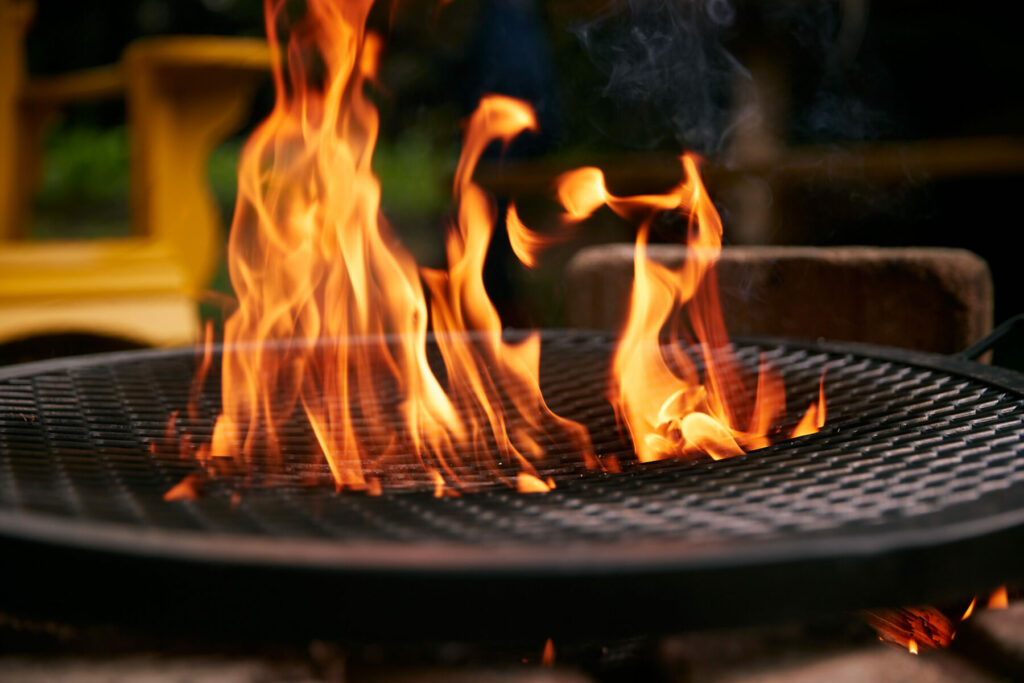
🔥 do you need a grill to cook over fire?
Can you cook on a campfire without a grill? Yes. Is it easier with one? Definitely.
Some campsites and national parks already have fire rings or standing charcoal BBQs equipped with a removable grill. Before you leave on a trip, check the campsite’s website to see if the fire pits have a grill grate — it saves you from packing one.
I always keep a grill grate in the trailer. They’re inexpensive, light, and you can find one at any hardware store that sells BBQs.
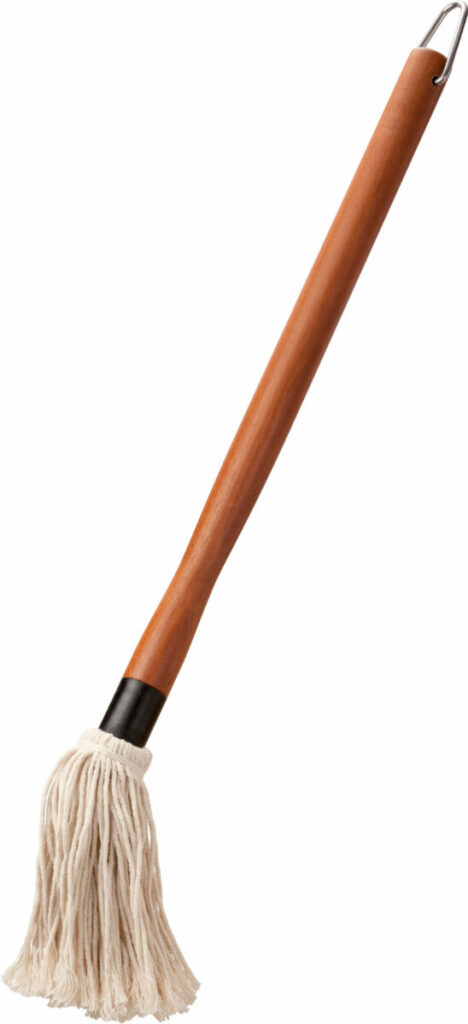
Oil, clean, repeat — that’s the rule for any grill grate, campfire or backyard.
Don’t have a grate at all? You can still cook directly on hot, glowing embers — no equipment required. Root vegetables, corn in their husks, and whole peppers all do well nestled right into the coals; my ember roasted vegetables are a good place to start if you want to try it.
While researching portable campfire grill grates, I noticed most come with a disclaimer that almost nobody reads.
🍗 the 2 fire cooking methods, explained
Underneath every fire cooking method are really just two approaches: direct and indirect. Reverse cooking, which I’ll get to, is simply the two used back-to-back on the same piece of meat.
Knowing which one to reach for is the difference between a perfectly cooked piece of meat and a burnt outside with a raw center.
🔥 direct cooking method: fast and hot
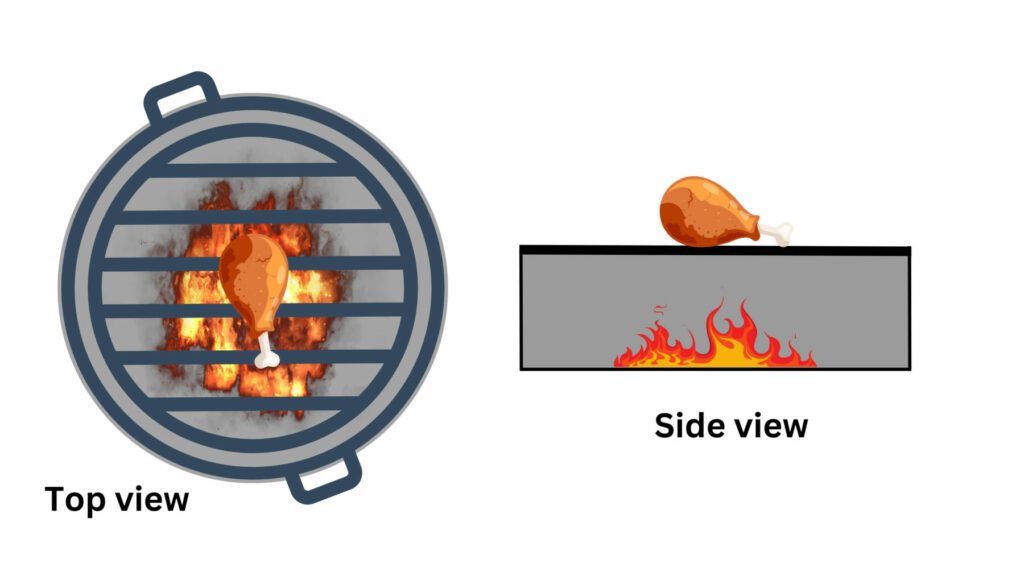
This is the most popular method. It means grilling food directly above the flames or embers, usually with no lid or cover. It’s for anything that cooks quickly: a hot dog, a hamburger, a salmon steak, a pork chop.
Take the most eaten meat in the world, chicken. My favorite cut for direct cooking is boneless chicken thighs.
- Start your fire.
- Always remove meat from the refrigerator at least 30 minutes before cooking to let it temper. Season or marinate the chicken with your favorite flavors.
- Set your grill grate in place and put the chicken directly above the fire (see photo below).
- Once the chicken releases easily from the grate — about 4 to 5 minutes — flip it and cook another 4 to 5 minutes.
With direct cooking, you always stay on top of the fire. It’s also the method I use for a quick catch like my campfire trout — a few minutes a side and it’s done.
♨️ indirect cooking method: low and slow
Some foods need longer cooking — a beef brisket, ribs, a bone-in ribeye, even chicken drumsticks. Placed directly above the flame, these pieces burn on the outside before the inside is done. That’s where indirect cooking comes in.
Back to the chicken.
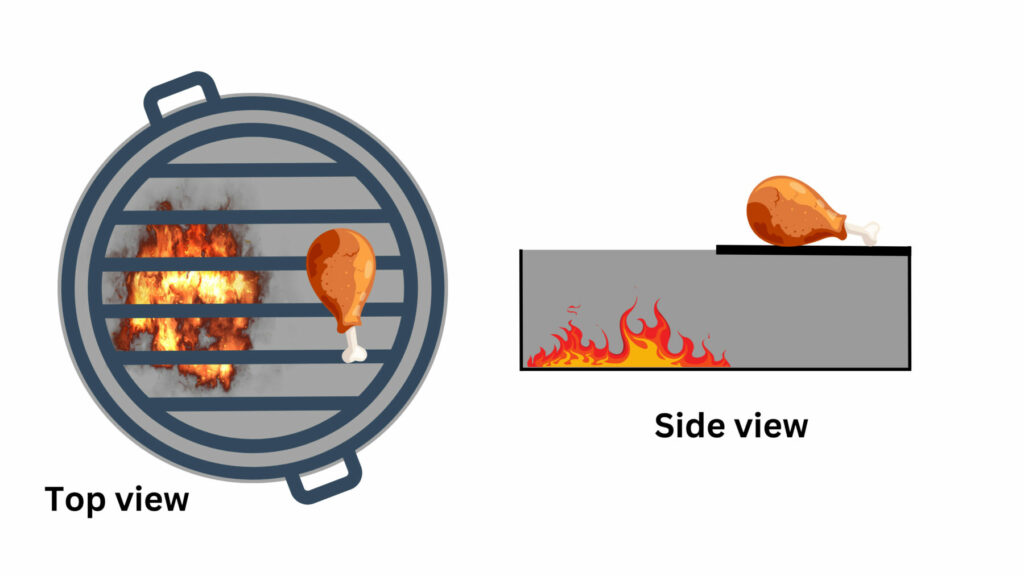
- Start the fire. Once it’s nice and hot, push the coals to one side of the pit.
- Let the meat temper, then season it just like for direct cooking.
- Place the chicken over the fire first and let it color (that’s direct cooking).
- Once it has the color you want, move it to the side of the pit with no fire underneath (see photo below).
- Cover it with a lid if you can. Natural convection then takes over, moving hot air around the meat the way an oven does.
🔄 reverse cooking: the best of both worlds
Reverse cooking is a subcategory of indirect cooking, and it’s what I reach for on very large pieces — a tomahawk steak or a spatchcocked (butterflied) chicken. It’s the same two methods, used backwards: cook indirect first, then finish direct to color the outside.
With a butterflied chicken, reverse cooking lets the meat cook through gently with the skin still on, then you finish the skin over direct heat right at the end for a crisp, tasty result. It’s the same logic I use for a thick campfire ribeye: gentle heat to bring it up to temperature, then a hard sear at the very end.
Whichever method you used, give the meat a rest on a rack under aluminum foil once it’s off the fire. That rest lets the juices redistribute through the meat instead of running out onto your cutting board.
👀 visual cues: how to know each method is working
You don’t need tall flames to cook well — you need embers. Wait until the wood has burned down and the coals are glowing orange with a light coat of gray ash; that’s a hot, even heat for direct cooking. Flames still licking up mean uneven, sooty heat that’s more likely to flare up when fat drips.
For direct cooking, the easiest cue is the one I already mentioned: the food releases cleanly from the grate on its own when it’s ready to flip. If you have to fight it off the grate, it needs more time.
For indirect cooking, look for steady, thin smoke escaping from under the lid rather than thick, rolling smoke, and resist lifting the lid every few minutes — every peek lets heat escape and adds cooking time. An instant-read thermometer takes the guesswork out of the rest: check the thickest part of the meat against the USDA’s minimum internal temperature chart for whatever you’re cooking.
⚠️ mistakes to avoid with these methods
The mistake I see most often is using direct cooking on a cut that needed indirect — a thick roast or a rack of ribs goes straight over the flame, blackens on the outside, and stays raw in the middle. If a piece is thick or bone-in and clearly needs more time than a quick sear can give it, move it off direct heat before it gets there, not after.
The second is skipping the rest. Cutting into meat straight off the fire loses all the juice you just worked to keep in — always give it a few minutes under foil.
And the third is not accounting for wind. A gust can turn a controlled bed of embers into open flame in seconds, especially with a fatty cut on direct heat. Keep an eye on the fire the whole time you’re cooking, not just when you’re flipping.
🏠 backyard grill, wood-fired oven and fireplace equivalents
You don’t need to be at a campsite to use any of this. A backyard gas or charcoal grill works the same way once you set up two zones — burners or coals on one side for direct heat, nothing on the other for indirect. It’s the exact same two-zone logic as a campfire, just with a lid that actually closes.
A wood-fired oven gives you indirect cooking by default — the heat surrounds the food rather than sitting directly under it, similar to covering your chicken on the fire. And a fireplace with a grate works exactly like a campfire: push coals to one side when you need indirect heat, pick your wood the same way you would outdoors, and lean on the same cast iron if you’re cooking without a grate.
❓ frequently asked questions
What’s the difference between direct and indirect fire cooking?
Direct cooking puts the food right above the flames or embers with no cover, for anything that cooks fast. Indirect cooking moves the food to the side of the fire, usually under a lid, so it cooks slowly with circulating hot air, like an oven.
Do I need a grill grate to cook over a campfire?
No, but it makes things much easier. Without one, you can still cook certain foods, like root vegetables or corn, directly in the embers.
How long should I sear meat directly over the flames?
It depends on thickness, but as a reference, boneless chicken thighs take about 4 to 5 minutes a side. Let the food tell you when it’s ready by watching for it to release cleanly from the grate rather than watching the clock alone.
When should I use reverse cooking instead of direct or indirect on their own?
Reach for reverse cooking on thick or large cuts, like a tomahawk steak or a spatchcocked chicken, where you want the inside to cook through gently before you crisp and color the outside at the end.
Can I use these methods on a backyard gas or charcoal grill?
Yes. Set up two zones — heat on one side, none on the other — and you have the same direct and indirect setup as a campfire.
Why does my food stick to the grill grate?
Usually the grate wasn’t hot enough or wasn’t oiled before the food went on. Oil the grate, let it heat up first, and give the food time to release naturally instead of forcing it off early.
How do I know when the embers are ready for indirect cooking?
Look for glowing coals with a light coat of gray ash and no active flame. That steady, even heat is what makes indirect cooking work like an oven instead of scorching one side.
Is it safe to cook directly on a painted grill grate?
Not without caution. Some decorative grates are painted, and that coating can release toxic fumes when heated. Burn an empty grate off over the fire a few times first, or use a plain, uncoated one if you’re not sure.
Do I need to let meat rest after direct cooking too?
Yes. Resting isn’t just for big indirect-cooked roasts — even a quick direct-cooked piece benefits from a few minutes under foil so the juices redistribute instead of spilling out when you cut into it.
What’s the best way to put out my fire when I’m done cooking?
Follow the same safe steps every time — I break the whole process down in my guide on how to put out your campfire.