
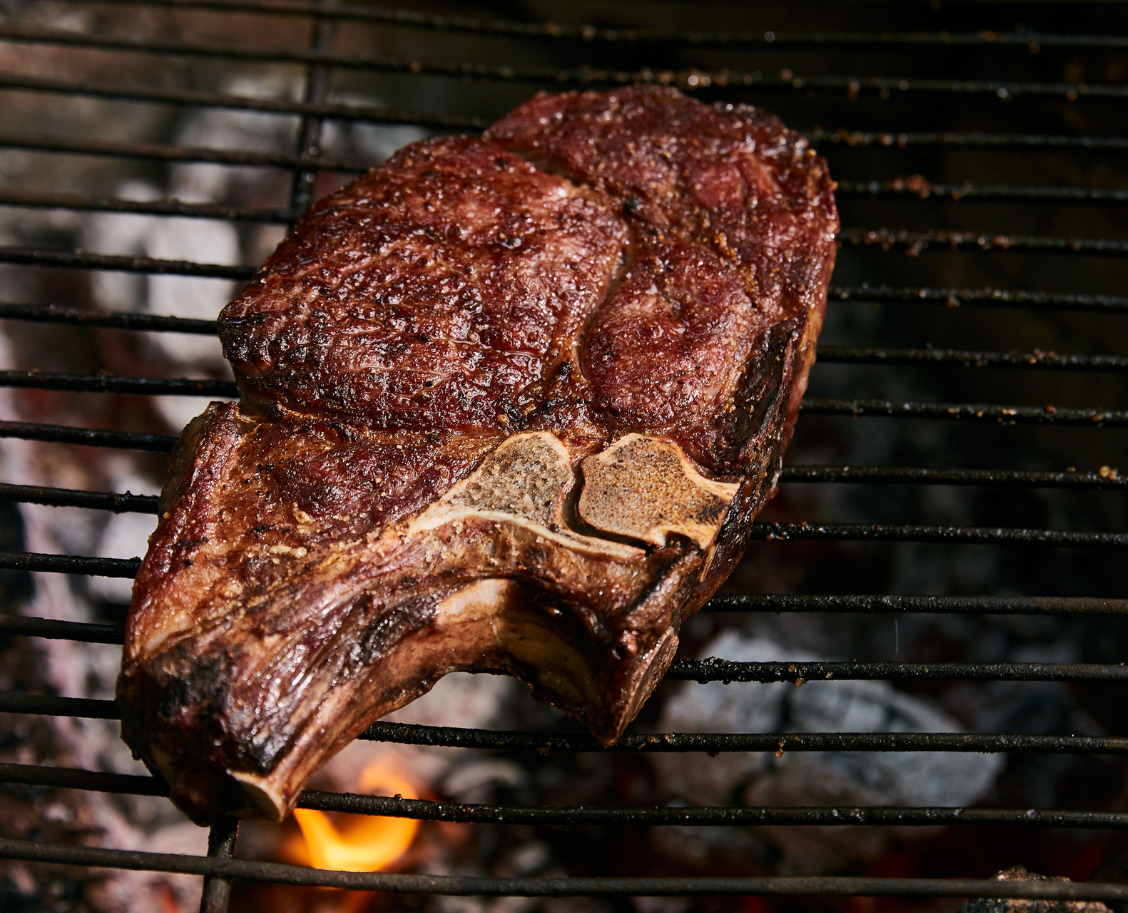
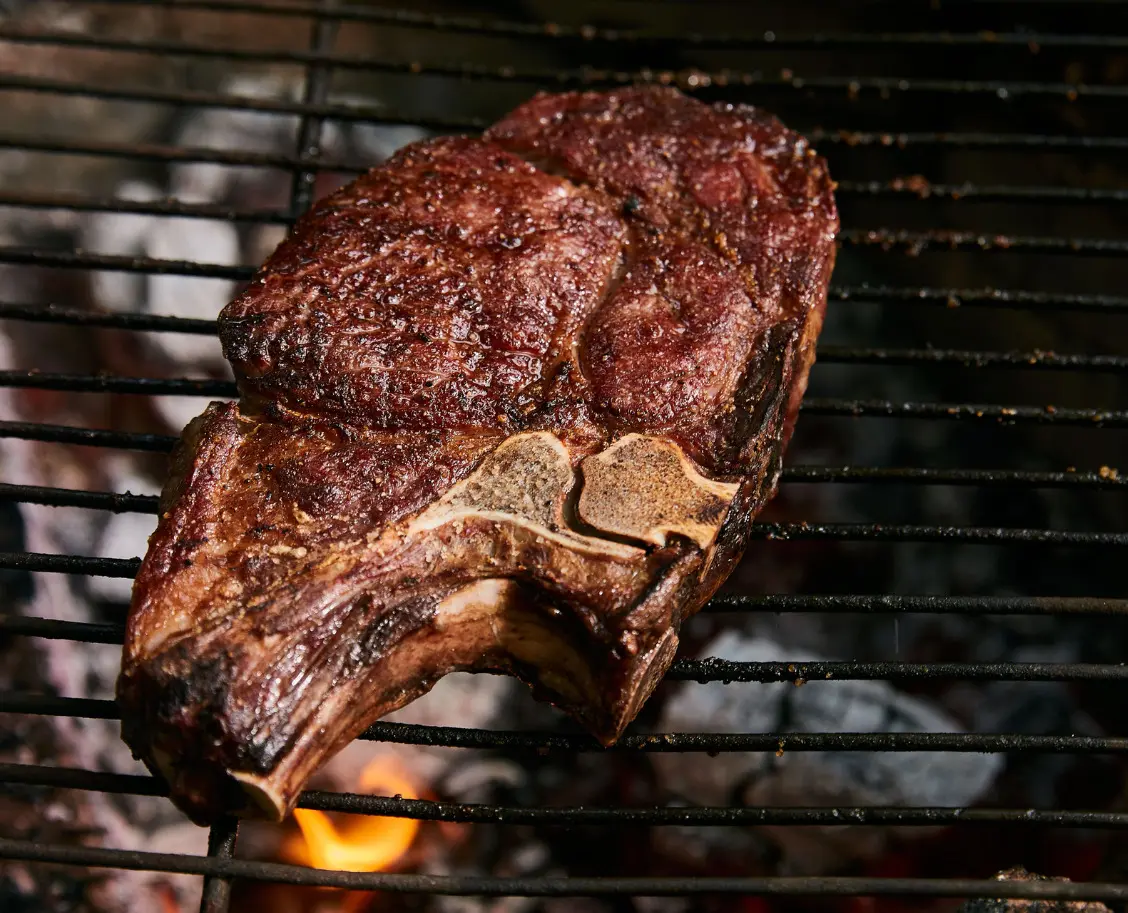
The perfect campfire steak is a very simple thing. You need great meat and a great fire — and, all right, a third ingredient I will admit to in a moment. What you do not need is marinade, sauce, butter basting or any of the beautification a steak gets indoors. Wood smoke and coarse salt do the entire job.
❤️ Why You’ll Love This Campfire Steak
- Two ingredients, no fuss. Great meat and a great fire — no marinade, sauce, or butter basting required.
- Steakhouse crust, campfire style. Quarter turns over a deep bed of embers build a golden, crackling crust that flames alone can’t give you.
- No guesswork with a thermometer. Pull it at 120°F and you land at rare to medium-rare every time.
- Built for two, eaten by the fire. One thick bone-in ribeye is a meal made for sharing, standing near the flames, with your hands.
- Works at home too. The same quarter-turn method holds up over a charcoal barbecue or a screaming-hot cast iron pan.
- Leftovers still earn their keep. Sliced thin and cold, it’s excellent on a sandwich or a salad the next day.
What follows is the whole method: which cut to buy, why the meat has to come out of the cooler early, how to read the embers, and the internal temperature I never go above. Get those four right and this becomes the steak people bring up years later.
🥩 What You Need for the Perfect Campfire Steak
- Meat — two rules: fat and thick. A bone-in ribeye with heavy marbling, at least 2 inches thick.
- Salt — coarse. Fleur de sel or Maldon. Try not to use table salt.
- Fire — a thick, active bed of embers, built at least two hours ahead.
I lied, by the way. I said two ingredients and then listed three. The fire counts.
💰 Why the Quality of the Meat Decides Everything

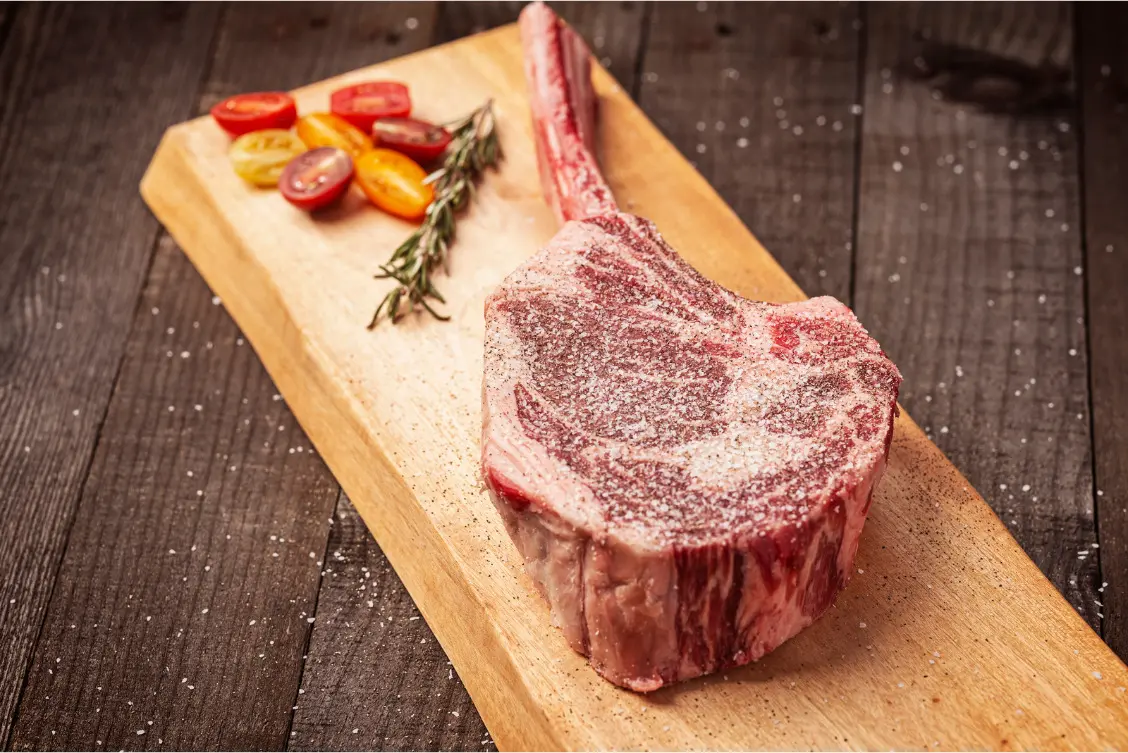
There are two roads here. You can buy the steak that is on special, the one-inch one, and I guarantee it will not be great. Or you can treat yourself.
A good, thick, properly marbled bone-in ribeye will set you back at least $50. You will have a far better evening for it — scratch that, you will never forget that steak. I would rather spend real money on a good steak once in a while than modest money on a bad one every week.
What you do not want is filet mignon. Filet mignon is cute, and nowhere near fatty enough for this job. Ribeye or T-bone, on the bone, two inches minimum.

🌡️ Relaxed Meat Is Happy Meat
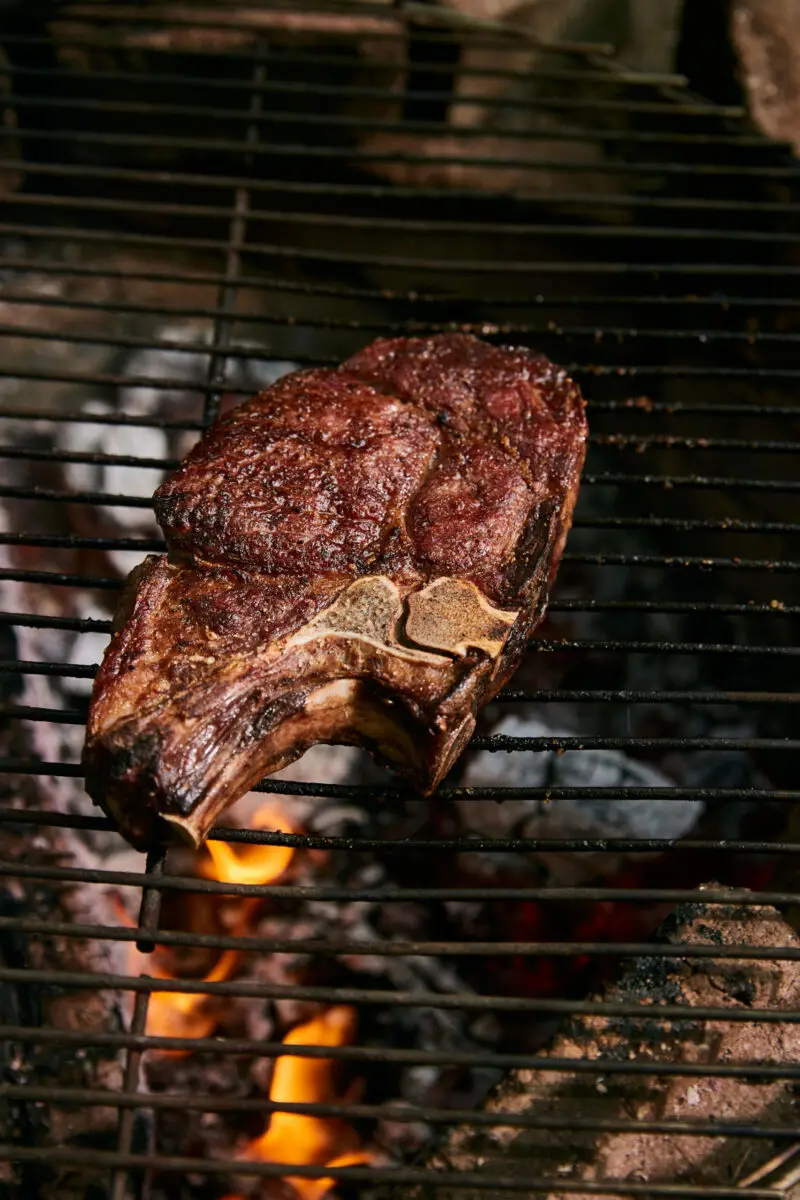
There are of course many ways to cook a steak, but over a campfire it needs almost nothing beyond the aroma of the wood and good salt. What it does need is to come out of the cooler ahead of time: leaving the steak at room temperature lets the fat in the meat relax, and a cold steak cooks unevenly no matter how good your fire is.
Obviously, if you’re cooking away from a kitchen and it is 100°F out, do not leave meat sitting in the sun for two hours. Use your head.
🔥 Building the Right Fire

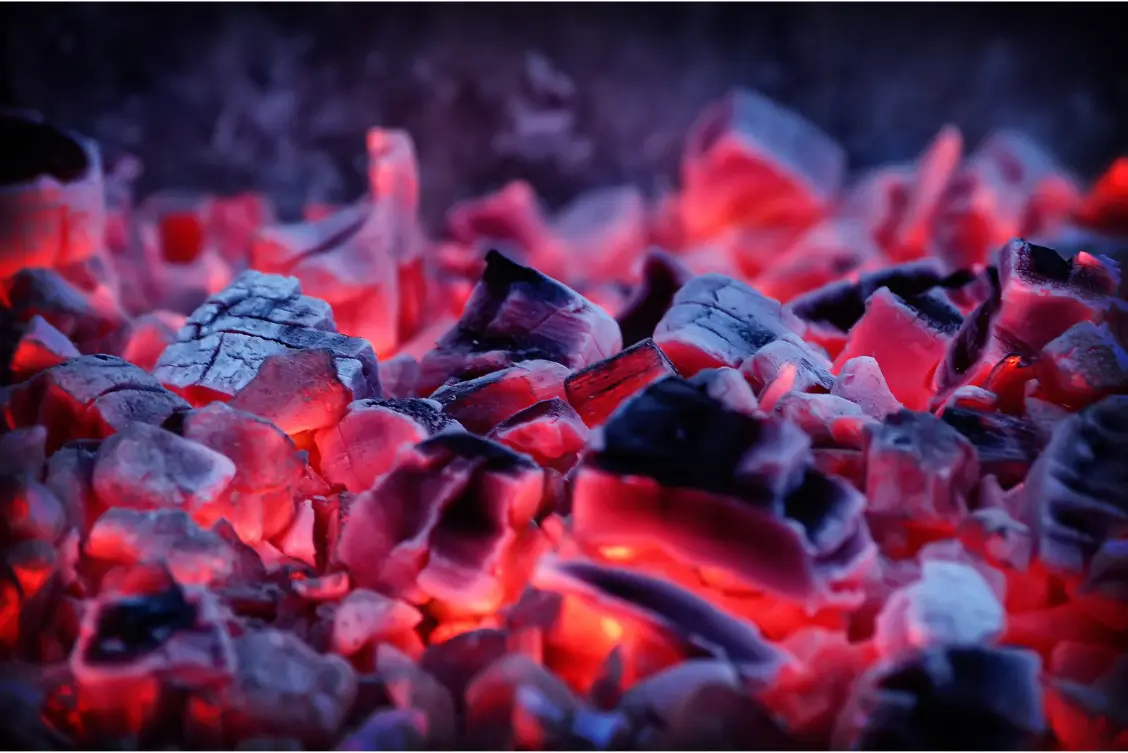
Start your fire at least two hours in advance and keep feeding it, so you end up with a bed of extremely hot, active embers. This is when I crack open the Pschitt and let the wood finish burning down on its own.
You know how wonderful a fire is late in the evening — deep red, steady, sitting on a thick layer of coals? That is exactly what we are after. The magic then happens between that heat and the marbling: beef fat at very high temperature is what builds the golden, crackling crust.
If you want the fuller picture on getting a fire to that stage — from first spark to a working bed of coals — our guide to building a fire walks through it step by step, and our rundown of the best types of wood for cooking will steer you toward dense hardwoods that hold heat long enough for a two-hour burn. And since you are building a fire specifically to run this hot, it is worth a quick refresher on campfire safety before you start.
📏 Meat Thermometer or Not?
Unless you are a genuine grill master, a cooking thermometer is the best way to get this right. It protects you from errors caused by the thickness of your particular piece of meat, and from the number of cocktails you had before dinner.
My target internal temperature is 120°F. I pull it there because the steak keeps climbing a few degrees while it rests.
🍳 The Rules for Cooking It
Even if every expert tells you otherwise, I give you permission to lift a corner and look underneath to make sure nothing is burning. But I am begging you: do not flip it over and over. We are not in a teppanyaki restaurant.
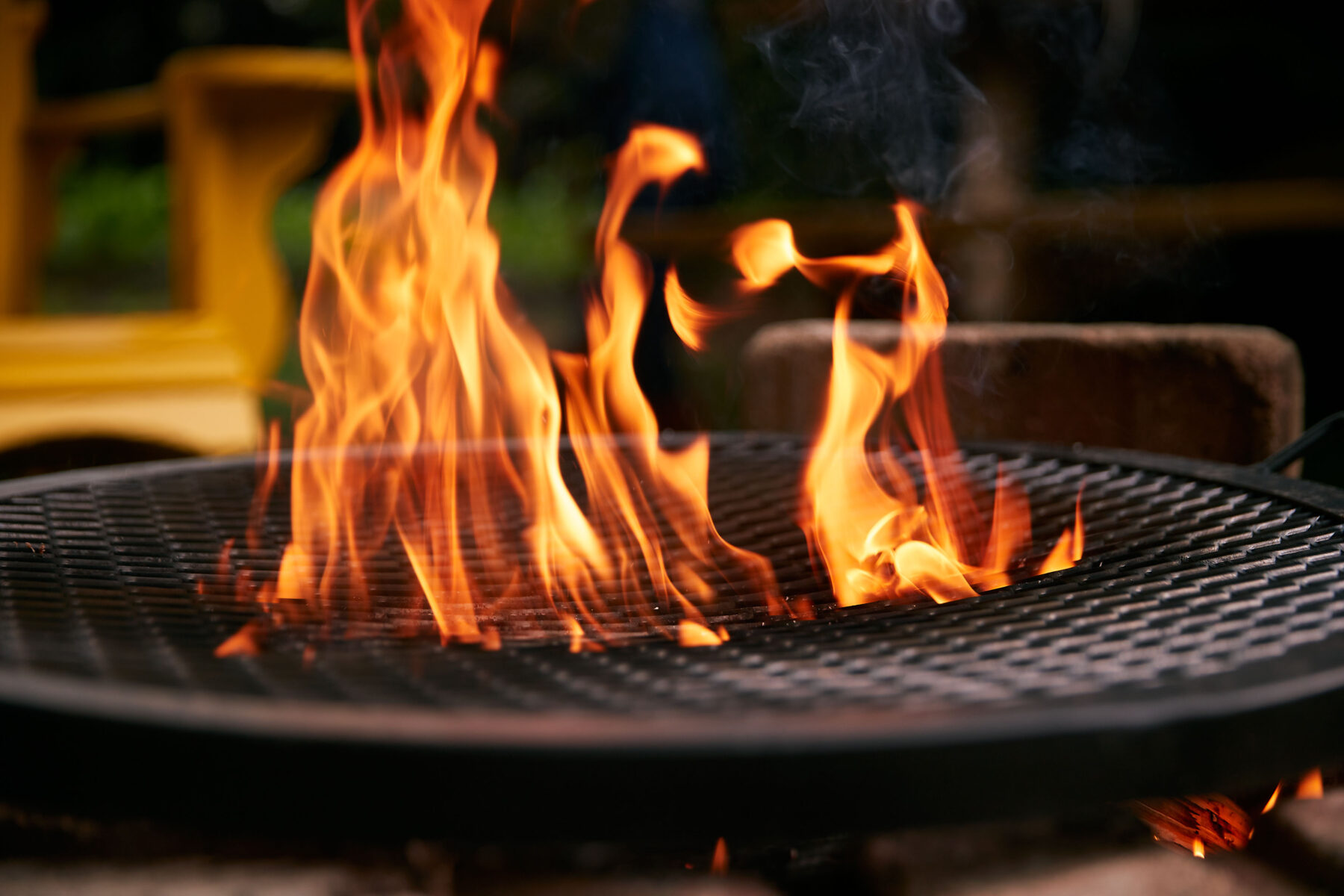
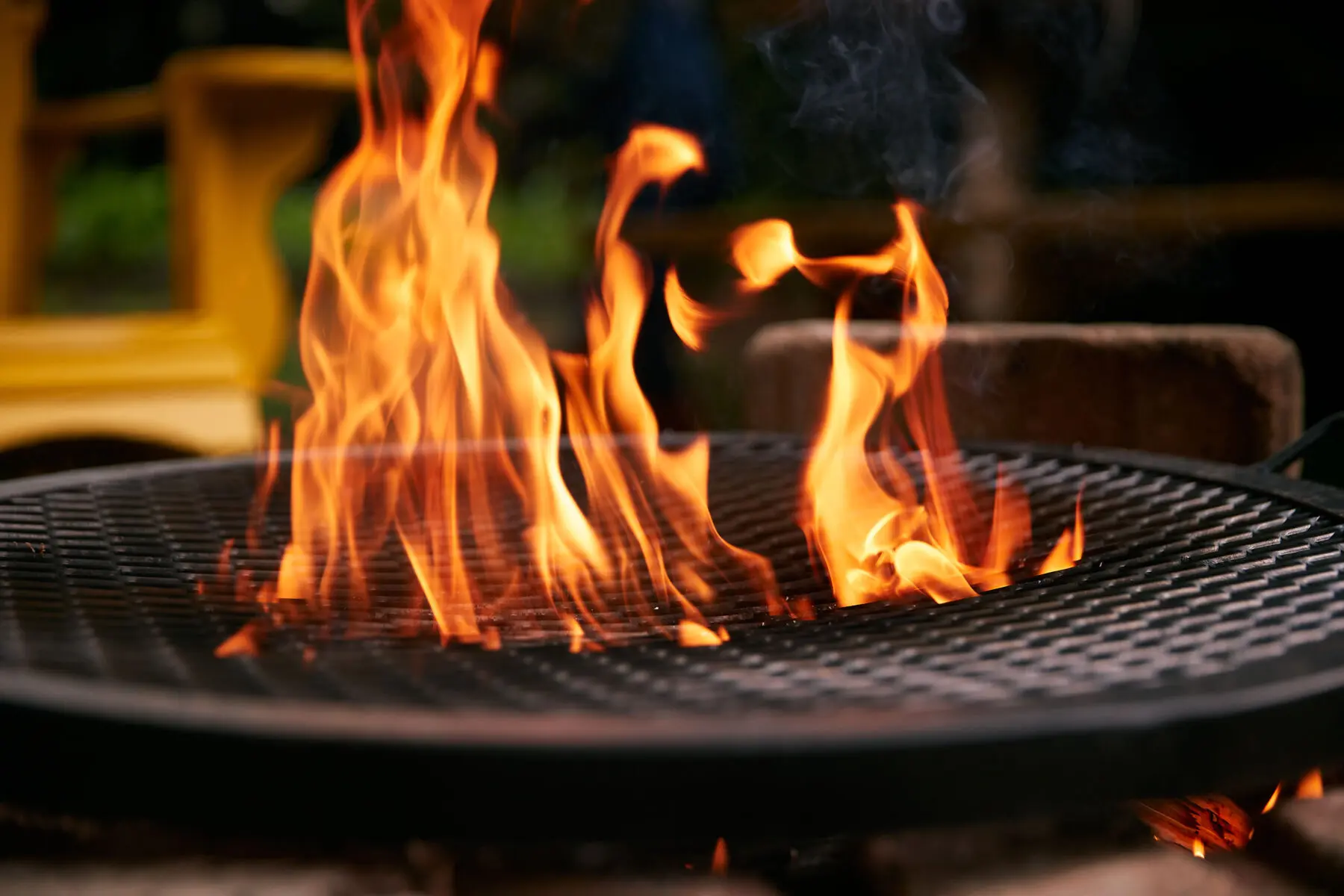
The method is quarter turns. One minute, rotate a quarter turn, adjusting the grate height or the steak position so it is only kissed by the flames and never engulfed. Repeat two or three times until the surface is properly caramelized, then turn it over once and do the same on the other side.
If the crust is beautiful but starting to go black, move the steak to the indirect heat zone and let it finish there. You will thank me later.
Then the rest. At least 10 minutes, off the heat, undisturbed. This is not optional — it is when the juices redistribute and the temperature finishes climbing. Slice it too early and it all ends up on the board.
🍽️ How to Serve
Slice it thickly against the grain, straight off the bone, and put it on a warm board with a little more coarse salt. Ember roasted potatoes or onions alongside, a green salad, and a red wine with some structure to it.
One two-inch bone-in ribeye comfortably feeds two people this way, which is exactly how a steak like this should be eaten — shared, standing near the fire, with your hands.
🧑🍳 Manon’s Tips for the Perfect Campfire Steak
- Look for a deep, steady red bed. That late-evening glow sitting on a thick layer of coals is what builds the crackling crust — thin gray ash means you are not hot enough yet.
- Flames are the enemy, not the friend. If fire is touching the meat instead of radiant heat coming off the coals, move it to the indirect zone or raise the grate.
- A cold grate is the most common mistake. Preheat it over the embers for at least 10 minutes before the steak goes on, or it will stick.
- Do not flip constantly. One-minute quarter turns, two or three per side — treat it like a steakhouse crust, not a teppanyaki show.
- Trust the pull temperature, not the clock. 120°F off the fire, every time, because ember heat and thickness vary too much to count minutes.
- Give it the full rest. At least 10 minutes undisturbed, or all your work ends up on the cutting board instead of on the plate.
🔄 Variations and Swaps
- Ribeye or T-bone. Both work — just keep it bone-in, heavily marbled, and at least 2 inches thick.
- Skip filet mignon. It is too lean to survive this kind of heat; save it for a pan indoors.
- No campfire? Use a charcoal barbecue. Coals to one side, an empty indirect zone on the other, same quarter-turn method.
- No charcoal either? A screaming-hot cast iron pan on a gas grill builds a similar crust, even if it will not quite match a wood fire.
❄️ Storage
Leftover steak keeps three days in the refrigerator and is superb cold, sliced thin into a salad or onto a sandwich with mustard. Do not reheat it in a pan — you will cook it a second time. Let it come to room temperature instead, or warm it for a few seconds at the very edge of the fire.
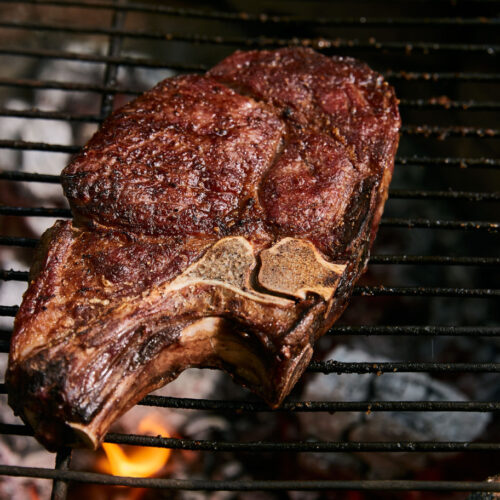
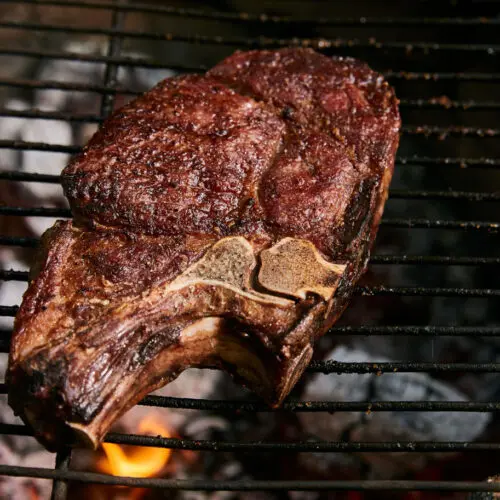
Perfect Campfire Steak
Equipment
- 1 wood fire with a deep bed of embers
- 1 grill grate
- 1 instant-read meat thermometer
Ingredients
- 1 aged bone-in ribeye steak about 45 oz (1.3 kg), at least 2 inches thick, heavily marbled
- coarse salt fleur de sel or Maldon — not table salt
- dry hardwood several logs, for the fire
Instructions
Two hours before dinner
- Start a wood fire with several logs of dry hardwood at least two hours before you plan to eat. Keep feeding it so you build a deep, active bed of embers.
One hour before
- Take the steak out of the refrigerator and set it on a plate, away from flies and the dog, about an hour before dinner. Letting it come to room temperature relaxes the fat and is what makes the cooking even. If it is very hot out, shorten this — use your head.
Cooking
- Place a grate about 4 inches (10 cm) above the embers and let it preheat for at least 10 minutes. A cold grate is what makes meat stick.
- Season the steak generously on both sides with coarse salt and lay it on the grate.
- Cook for 1 minute, then rotate a quarter turn, adjusting the grate height or the steak position so the meat is only kissed by the flames, never engulfed by them.
- Repeat the quarter turn 2 or 3 more times, until the surface is deeply caramelized. You may lift a corner to check that nothing is burning — but do not flip it repeatedly. We are not in a teppanyaki restaurant.
- Turn the steak over once and repeat the same rotation process on the second side. If the crust is beautiful but starting to blacken, move the steak to the indirect heat zone to finish.
- If you are using a thermometer — and with a steak this thick you should — pull it at an internal temperature of 120°F (rare to medium-rare). Never go past 125°F.
Rest
- Remove the steak and let it rest at least 10 minutes before slicing. It keeps cooking during this time, which is exactly why you pulled it at 120°F.
Notes
- What is the best cut for a campfire steak?
- Can I use a T-bone instead of a ribeye?
- How long do I cook a campfire steak?
- Do I really need a thermometer?
- How far above the embers should the grate be?
- When should I salt the steak?
- Why is my steak burning on the outside and raw inside?
- What if I don’t have a campfire?
- How long should it rest?
- How many people does one steak feed?
❓ Frequently Asked Questions
What is the best cut for a campfire steak?
Bone-in ribeye, heavily marbled, at least 2 inches thick. T-bone is the other good answer. Avoid filet mignon — it is too lean to survive this kind of heat.
Can I use a T-bone instead of a ribeye?
Yes — T-bone is the other good answer here. Just keep it bone-in, heavily marbled, and at least 2 inches thick; skip filet mignon, which is too lean for this kind of heat.
How long do I cook a campfire steak?
There is no honest answer in minutes, because it depends on the embers and the thickness. Work in one-minute quarter turns until both sides are caramelized, and pull at 120°F internal.
Do I really need a thermometer?
If your steak is thick, yes. It is the difference between a $50 steak and a $50 mistake — and it removes all the guesswork, including the guesswork caused by the cocktails.
How far above the embers should the grate be?
About 4 inches (10 cm), and preheated for at least 10 minutes before the steak touches it. A cold grate is what makes meat stick.
When should I salt the steak?
Just before it goes on the fire, on both sides, with coarse salt. Fleur de sel or Maldon, not table salt.
Why is my steak burning on the outside and raw inside?
Flames rather than embers. You want radiant heat from coals, not fire touching the meat. Raise the grate, or move the steak to the indirect zone to finish.
What if I don’t have a campfire?
The same method works over a charcoal barbecue: build the coals to one side, leave the other side empty for the indirect zone, and follow the quarter-turn method exactly as written. On a gas grill, a screaming-hot cast iron pan gets you close, though it will not build quite the same crust as wood.
How long should it rest?
At least 10 minutes. It keeps cooking during that time, which is exactly why you pull it at 120°F rather than at your target temperature.
How many people does one steak feed?
One two-inch bone-in ribeye comfortably feeds two people — it is meant to be shared, standing near the fire, with your hands.