

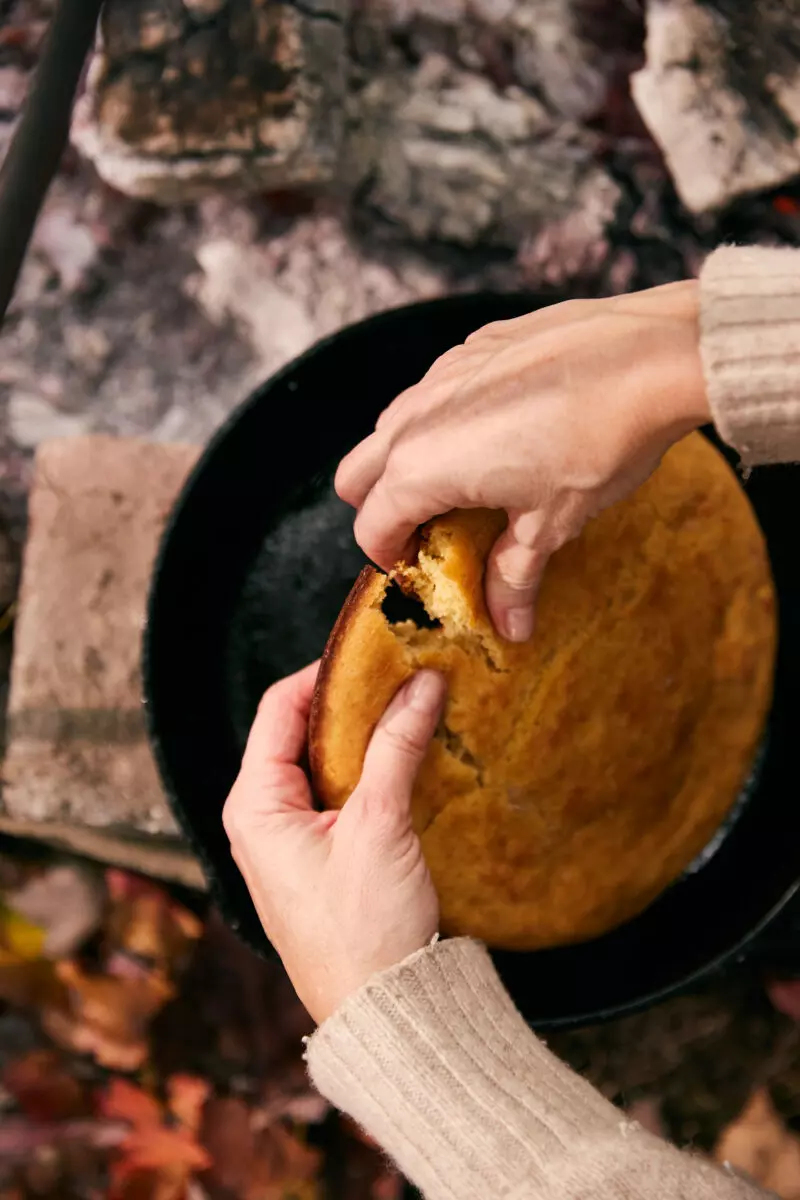
I’ve always had a soft spot for cornbread. To me, it’s the real deal — the cowboy bread you tear apart with your hands and eat with a fat pat of butter melting into it. It’s also the bread I reach for every time I make chili, because nothing soaks up a good stew like a warm wedge of campfire cornbread baked in a cast iron Dutch oven. Throw in some sharp cheddar and a handful of crumbled cooked bacon if you want to make sure everyone hollers when they taste it.
❤️ Why You’ll Love This Campfire Cornbread
- Ready in 25 minutes. Five minutes of mixing and twenty over the coals — no rising, no resting, no fuss.
- One pot, start to finish. The same cast iron Dutch oven mixes, tempers the oil, and bakes the bread, so there’s less to haul and less to wash at camp.
- That crackly crust. Tempering hot oil into the batter before it hits the pan is what gives the edges their crisp, almost-fried bite.
- Works with whatever fire you’ve got. Briquettes, open coals, or a regular oven at home all get you there.
- The bread that saves a stew. It’s what I reach for anytime there’s chili, beans, or a camp stew that needs something to soak it up.
- Easy to make it yours. Cheddar and bacon, jalapeños, or a drizzle of honey all fold in without changing a thing about the method.
This is the cornbread I make most often on the spot, baked in a 10-inch cast iron Dutch oven — buried in coals or set right in a camp oven, whichever setup you’re running that trip. Below, I’ll walk through the cornmeal that makes the real difference, how to manage your heat with briquettes or coals, the ingredient swaps that actually work, a couple of variations, and the full recipe card with exact measurements.
🔥 Why Cornbread Belongs at Every Campfire
Cornbread cooked in a cast iron pan over coals — with a crackling, deep-golden crust on the bottom and a tender, slightly crumbly interior — is one of the best things you can make at a campfire. The dish has roots in the American South and in Indigenous North American cooking, since corn was a staple long before colonization, but the camping version brings together the best of both: stone-ground cornmeal, a hot cast iron pan, and the gentle smoky character that only an open fire gives you. Served warm with butter, or alongside chili and stew, it’s the bread that makes a meal feel finished.
🌽 Choosing the Right Cornmeal
The key to great cornbread is the cornmeal itself. Whole-grain, stone-ground cornmeal from a real mill tastes completely different from the dusty, mass-produced cornmeal on supermarket shelves. The texture is gritty and irregular, and the flavor is sweet, nutty, and unmistakably corn. That’s the difference between cornbread you remember and cornbread you just tolerate. Skip anything labeled “corn flour” (too fine) or “corn meal mix” (it already has flour and leavening added — you don’t need it here).
🍳 The Gear: A 10-Inch Cast Iron Dutch Oven
This recipe is built around a 10-inch cast iron Dutch oven with a lid — the classic camp oven. The lid matters as much as the pot: it lets you put heat on top of the bread as well as underneath, so it actually bakes instead of just frying on the bottom. If you’re cooking over an open fire without briquettes, aim to recreate the same idea — coals underneath, a scattering of embers or hot coals on the lid — rather than one big blaze under the pot.
🧂 Ingredients and Easy Swaps
This is a short ingredient list, and every item earns its place. Dry: cornmeal, a little all-purpose flour for structure, baking powder and baking soda for lift, sugar, and salt. Wet: an egg, buttermilk, and oil — ideally bacon fat or duck fat, because that’s where a lot of the flavor comes from.
- No buttermilk? Stir a tablespoon of lemon juice or white vinegar into a cup of regular milk and let it sit for five minutes.
- No bacon fat or duck fat? Butter works, though plain vegetable oil will taste noticeably more neutral.
- Want it richer? Fold shredded sharp cheddar and crumbled cooked bacon right into the batter.
🔥 Cooking It Over Coals
Heat management makes or breaks this bread. Preheat your Dutch oven for a full 10 minutes before the batter goes anywhere near it — the instant sizzle when batter hits a hot, oiled pan is what creates that crackling crust. Don’t overmix once your wet and dry ingredients come together; cornbread batter should stay lumpy, not smooth. Ten to twelve folds is plenty — overworked batter bakes up tough and dense instead of tender. Once it’s cooking, resist the urge to lift the lid every five minutes; each peek lets heat escape and adds to your cook time. You’re looking for a golden top, crisp edges, and a center that springs back lightly when you press it.
🧑🍳 Manon’s Tips for Campfire Cornbread
- Preheat the pot, not just the fire. Give the Dutch oven a full 10 minutes over the coals before the batter goes in — you want that instant sizzle when it hits the pan.
- Stop stirring sooner than you think. Ten to twelve folds is plenty; a lumpy batter bakes up tender, an overworked one bakes up tough and dense.
- Keep the lid on. Every peek lets heat escape and adds to your cook time — trust the briquette math and only check near the end.
- Build your coal bed right. A direct blaze scorches the bottom before the inside catches up; even, glowing coals give you steadier heat than open flame. My guide to building a fire covers how to get there.
- Read the top, not the clock. If it’s browning fast while the center still jiggles, slide a couple of coals off the lid and give it a few more slow minutes instead of pulling it early.
- Kill your fire properly when you’re done. A Dutch oven fire is still a fire — see my guide to putting out a campfire and the National Park Service’s campfire safety guidelines for doing it right.
🌶️ Variations Worth Trying
Once you’ve got the base down, cornbread is an easy one to play with. Fold in a half-cup of fresh or frozen corn kernels for texture. Add chopped jalapeños and a handful of shredded cheddar for a savory, spicy version. Stir maple syrup or honey into the wet ingredients if you want a sweeter, more Northern-style loaf. Or keep it simple and finish the top with flaky salt and a drizzle of honey the second it comes out of the oven.
🍽️ Serving, Storage, and Leftovers
This recipe makes enough for four as a hearty side — plenty if there’s chili, stew, or beans on the table too, less if everyone goes back for a second piece, which they usually do. It’s best in the first hour out of the pan, warm enough that butter melts straight into it. Leftovers keep well, wrapped, at room temperature for a day, and reheat nicely in a dry skillet over low heat the next morning. Pair it with chili, a pot of beans, or really any camp stew — or set it beside a Perfect Campfire Steak for something heartier. Either way, it’s the bread that turns a meal into an occasion.
Campfire Cast Iron Cornbread
Equipment
- 1 10-inch cast iron Dutch oven with lid
Ingredients
Dry ingredients
- 3/4 cup whole cornmeal stone-ground
- 1/4 cup all-purpose flour
- 1 tsp baking powder
- 1/4 tsp baking soda
- 1 tbsp sugar
- 1/2 tsp salt
Wet ingredients
- 1 egg
- 1 cup buttermilk plus a splash more as needed
- 2 tbsp oil bonus points if you use bacon or duck fat!
Instructions
Make it ahead
- Combine the cornmeal, flour, baking powder, baking soda, sugar, and salt in a small bag or container.
Over the fire
- Set the oven to about 375°F, or light 23 charcoal briquettes and let them ash over for 10 minutes.
- Preheat the Dutch oven for 10 minutes, resting it on 7 briquettes underneath with 16 briquettes on the lid.
- Pour the dry ingredient mix into a bowl.
- Add the egg and enough buttermilk so the batter is a little thinner than pancake batter.
- Very carefully lift the hot Dutch oven off the heat, pour in the oil, and swirl the pan to coat the bottom. Pour that hot oil into the batter and stir it in.
- Give the batter a final stir and pour it into the hot Dutch oven.
- Set the Dutch oven back over the coals (or in the oven) and cook for about 15 to 20 minutes, until the top is golden brown.
Notes
- Making it without a Dutch oven
- Buttermilk substitutes
- Why the cornbread turns out crumbly
- Prepping ingredients at home
- Cornmeal vs. corn flour
- Cooking over an open fire without briquettes
- Keeping the bottom from burning
- What size Dutch oven to use
- Adding cheese or bacon to the batter
❓ Frequently Asked Questions
Can I make this without a Dutch oven?
Yes — a cast iron skillet covered loosely with foil works at home, or just use your regular oven at 375°F for about 20 minutes. At camp, any heavy cast iron pan with a way to add heat from above will get you close.
What can I use instead of buttermilk?
Stir a tablespoon of lemon juice or white vinegar into a cup of milk and let it sit for five minutes before using. It’s not identical, but it does the job.
Why did my cornbread come out crumbly instead of tender?
Usually too much cornmeal relative to flour, or overbaking. Stick to the ratio in the recipe card and pull the bread as soon as a toothpick comes out with just a few crumbs.
Can I prep anything at home before I leave?
Yes — combine all the dry ingredients in a bag or container before you go. At camp you’re just adding the egg, buttermilk, and hot oil.
What’s the difference between cornmeal and corn flour?
Cornmeal is coarser and gives cornbread its characteristic texture; corn flour is ground much finer and makes a denser, less interesting crumb. Don’t substitute one for the other here.
Can I cook this over an open fire without briquettes?
Yes. Aim for the same idea as the briquette setup — moderate coals underneath the Dutch oven and a scattering of hot embers on the lid, rather than one big flame under the pot.
How do I keep the bottom from burning?
Don’t set the Dutch oven directly on a bed of flames — use coals or briquettes, which give steadier, gentler heat, and check the bottom partway through if you can do it without losing too much heat.
What size Dutch oven do I need for this recipe?
This recipe is built around a 10-inch cast iron Dutch oven with a lid, which is what lets the bread bake through evenly instead of drying out at the edges. A similarly sized cast iron skillet with a loosely tented sheet of foil works too.
Can I add cheese or bacon to the batter?
Yes — fold in shredded sharp cheddar and crumbled cooked bacon right before the batter goes into the pot. It’s the version I make most often, and it’s the one that gets the loudest reaction at the table.