
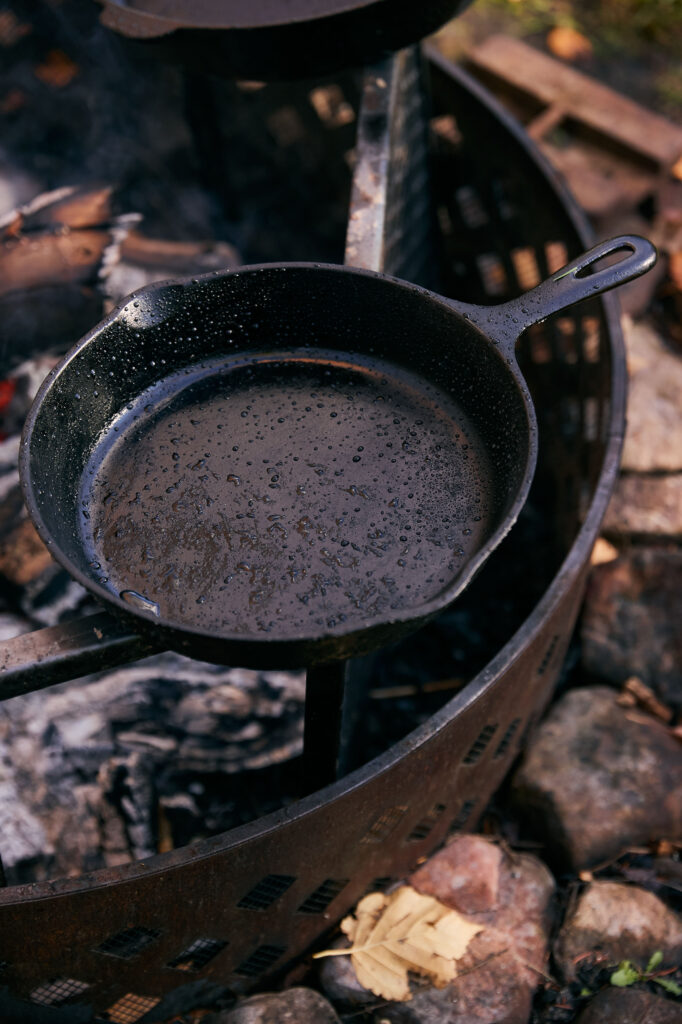
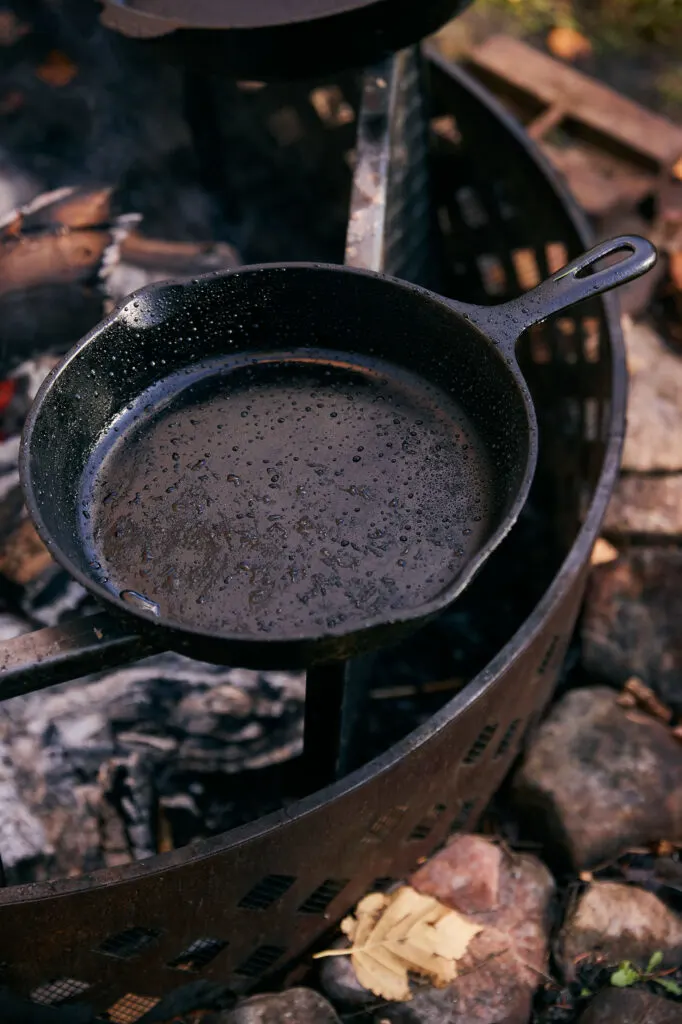
Quite simply put, you will not see me cook with any other type of cookware than cast iron. When it comes to cooking over fire — campfire, backyard BBQ, fireplace, wood oven, doesn’t matter — it’s my go-to, and after years of hauling these pans around I have zero interest in switching.
🔥 Why Cast Iron Cookware Is the Only Thing I Trust on the Fire
There’s a reason cowboys and our grandmothers loved cast iron casseroles and pans. Cast iron is almost indestructible if you take care of it.
You can go from cooking on a gas stove to cooking directly over a fire, or even in the fire itself, without worrying about ruining your cookware. Try that with a nonstick pan and you’ll be buying a new one by the end of the trip. Cast iron provides even heat distribution and holds heat far longer than any other cooking vessel I own — which matters a lot when your heat source is a campfire that keeps shifting instead of a stove dial that stays put.
⚖️ The Two Real Downsides of Cast Iron
Ask anyone who cooks with cast iron regularly what the downside is, and you’ll get the same answer every time: I love my cast iron, but the weight is insane.
The weight really is a problem, especially if you camp a lot. Rule one when you’re packing a trailer or a camp box is to keep it as light as possible, and a stack of cast iron pans fights that rule at every turn.
It’s less of an issue at home, though once your collection grows the way mine has, you’ll need serious shelving just to store it all.
The other real flaw is that keeping cast iron cookware for life takes a bit of work. The cleaning process isn’t complicated exactly, but it does have rules — and breaking them is usually how people ruin a pan and blame the material instead of themselves.
🧼 How I Clean Cast Iron Without Stripping the Seasoning
There are two schools of thought on cleaning cast iron: with soap and without. Personally, I keep a stiff brush by the sink and skip the soap entirely.
Heat is usually enough to loosen whatever’s stuck to the pan. It is not advisable to soak cast iron for hours trying to unstick food — that’s how you invite rust. Instead, add a little coarse salt and scrub with a soft sponge; it lifts residue without touching the seasoning underneath. Never use steel wool on cast iron.
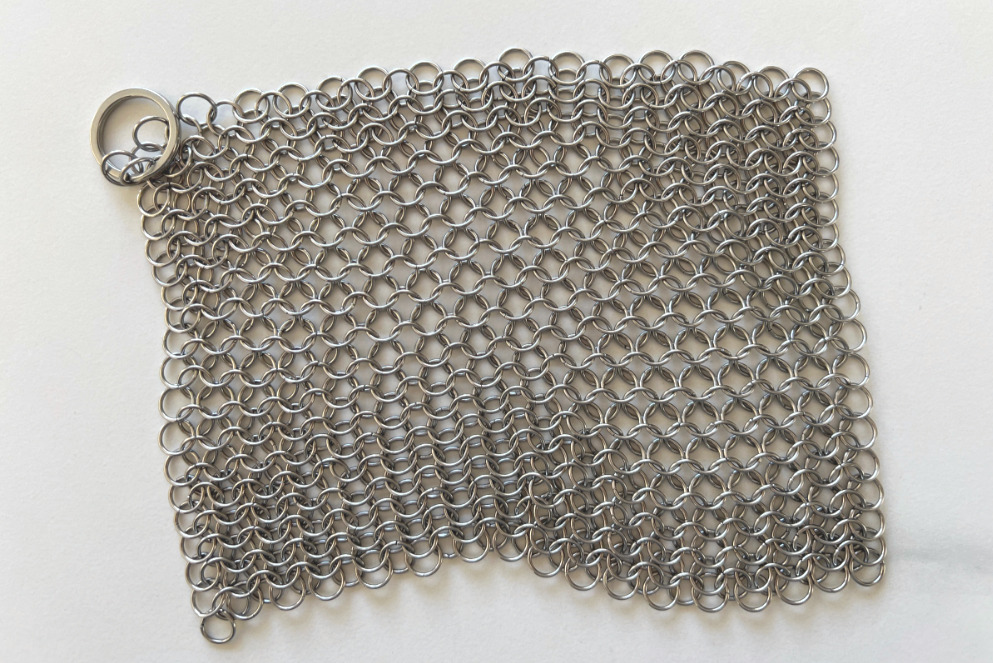
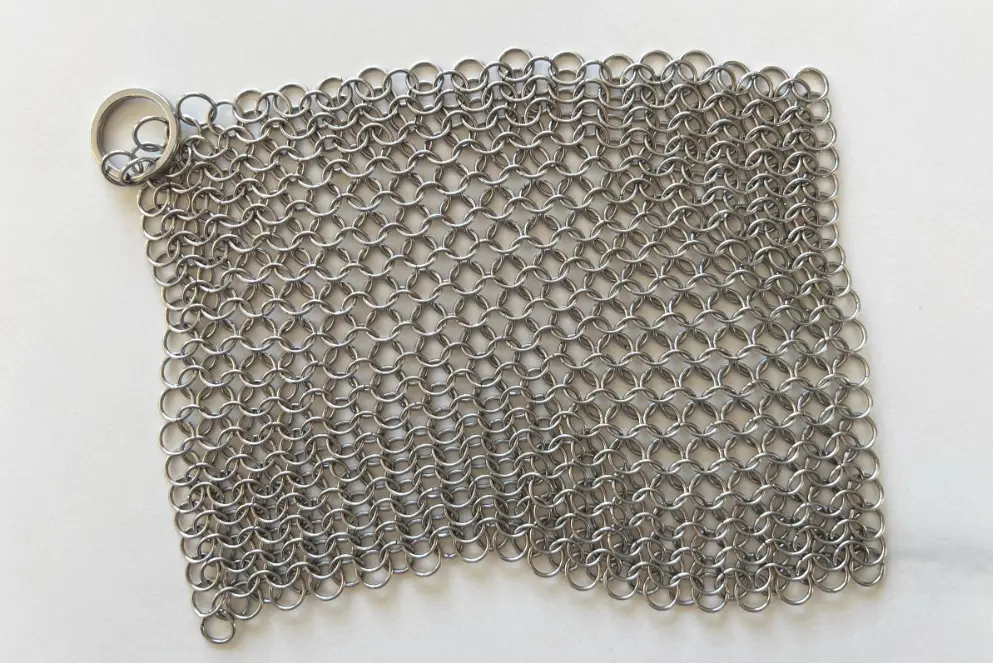
I also keep a chainmail scrubber for the stubborn spots and rinse everything under warm water. Between the two, that’s usually all it takes.
After washing the pan, wipe it dry right away to prevent rust from forming. Do not let your cast iron tools sit out wet for days, as they will rust quickly. If you do notice rust, a few successive oil treatments as described below will bring it back.
Note: if your cast iron skillet is relatively new and hasn’t built up years of seasoning yet, it’s best not to cook acidic foods in it, such as tomato sauce or citrus juice. The metal can react, discoloring the food and giving it a metallic taste.
- a stiff brush or a chainmail scrubber
- coarse salt for stubborn residue
- a soft sponge — never steel wool
- a clean towel and a little neutral oil for drying and a quick wipe-down
🛢️ Seasoning a New Cast Iron Pan (or Reviving an Old One)
Most commercial cast iron pans are now pre-oiled, which means they’ve already been coated with oil and heated a few times. This procedure forms a layer that prevents food from sticking and protects the pan.
Although a cast iron pan will never be as non-stick as a Teflon covered pan, it has the advantage of being a source of iron rather than Teflon, which remains a more than questionable finish for your health.
Otherwise, by following a few consistent habits around oiling and cleaning your pans, you’ll prevent most foods from sticking to them at all.
🔥 Seasoning Cast Iron Over a BBQ, Campfire, or Wood Oven
The best way to season a new piece of cast iron is undoubtedly on the BBQ.
First, preheat the BBQ or oven to 350℉. Using a paper towel, rub the inside and outside of the pan with a neutral edible oil with a high smoke point, such as vegetable oil, light olive oil, shortening, or canola oil.
Place your cast iron cookware upside down on the grill. If you use your home oven instead, turn the hood fan on maximum power — there will be a lot of smoke during this process.
After 30 minutes, remove the pan and let it cool. Doing this once is enough to make the pan ready for cooking, but feel free to repeat it a few times if you want to build a thicker protective layer more quickly.
The same logic holds over a campfire or in a wood-fired oven: what the pan needs is steady, dry heat, not a specific appliance. The one real difference with an open fire is that you can’t dial in an exact temperature, so keep the pan over a bed of coals rather than active flames, a little further back than you think, and check on it more often than you would with a BBQ or an oven. If you’re still getting a feel for the difference between cooking in embers versus over flames, our guide to fire cooking methods breaks it down.
📦 How I Store Cast Iron So It Survives
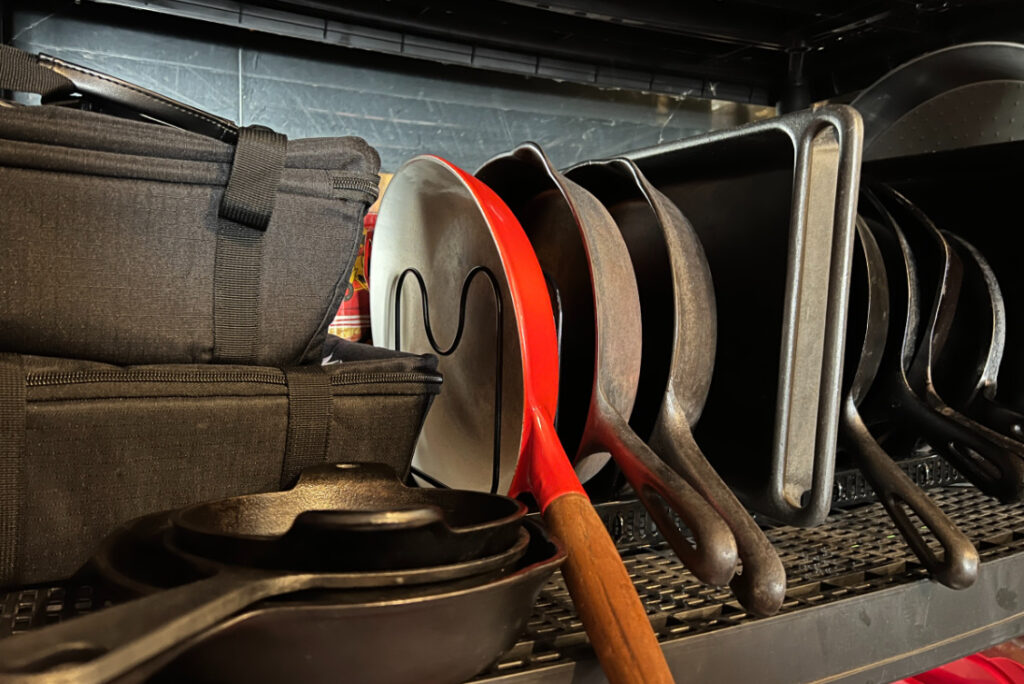
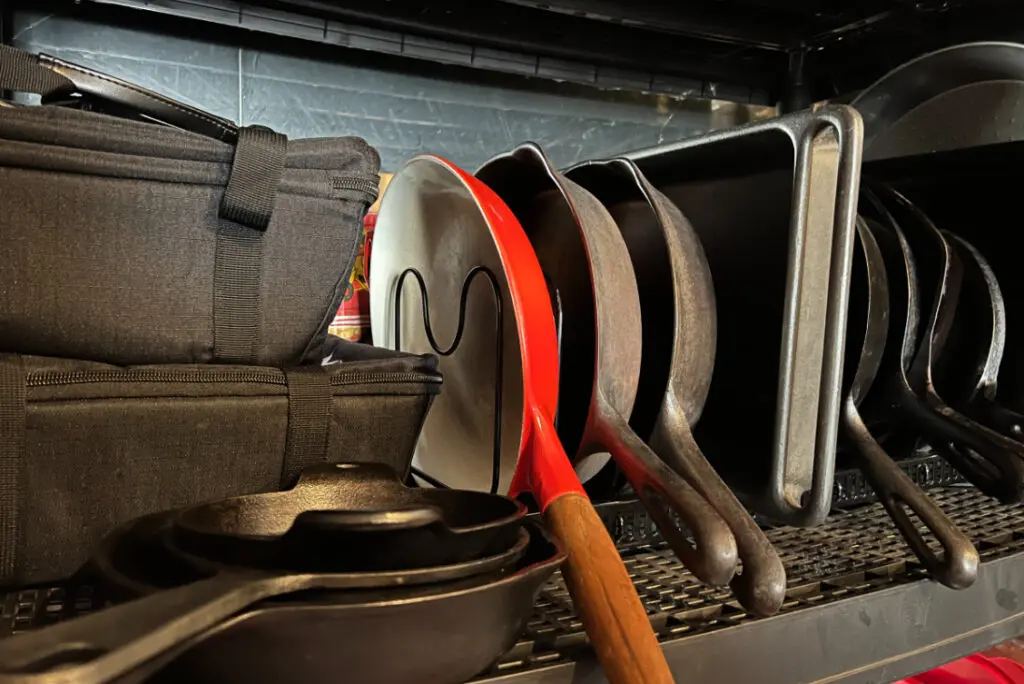
Once a piece is nicely seasoned, I store it in the garage, on a rack on a sturdy shelf.
Honestly, the best way to preserve cast iron for generations is to cook with it often. Every time you fry, sear, or sauté something, you add another thin layer of oil and protect the pan a little more.
- the surface looks dull or grey instead of dark and slightly glossy
- food sticks even after a proper preheat
- you notice a faint film of rust, especially near the rim
- the pan feels rough or matte to the touch instead of smooth
⚠️ Mistakes and Safety Notes With Cast Iron
A few habits separate people who keep cast iron for decades from people who buy a new pan every year:
- don’t soak it for hours — that’s the fastest way to invite rust
- skip the steel wool — it strips the seasoning you worked to build
- go easy on acidic ingredients until the pan has years of seasoning behind it
- ventilate well when you season indoors — it smokes more than you’d expect
And the fire management side of it matters just as much as the cookware side: if you’re building and managing the fire itself, not just the pan on top of it, our guide to building a fire covers the basics I rely on every time.
🍳 Which Cast Iron Cookware to Actually Buy
If I could only keep one piece, it would be my Pre-Seasoned Cast Iron 2-in-1 Multi Cooker — 3-Quart Dutch Oven and Skillet. One half serves as a skillet or as a lid for the other, so you’re really getting two pieces of cookware for the storage space of one.
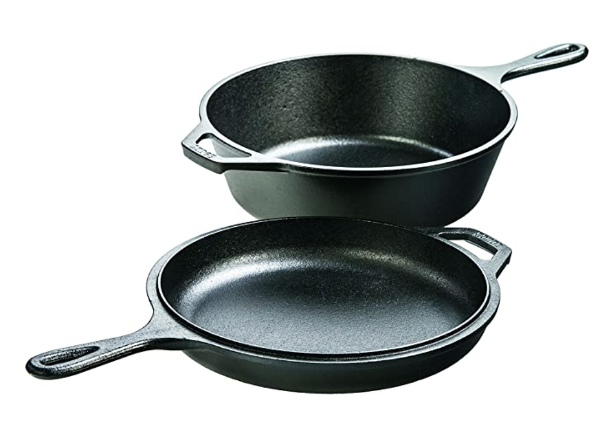
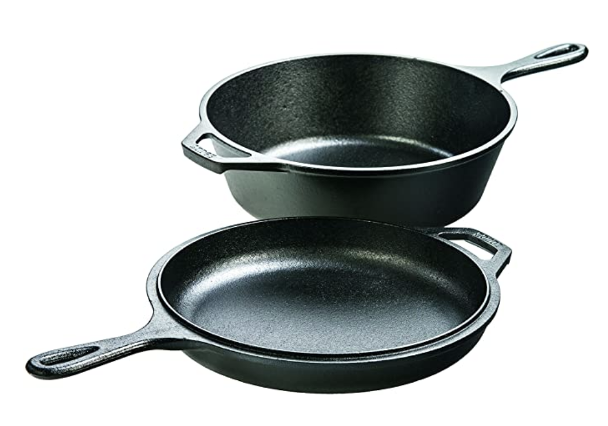
You can cook a lasagna for six people, bake bread, make a pizza on the campfire, a pot of chili, green chilaquiles, or simply fry your eggs in the morning. It’s the same combo I reach for when I make my cowboy campfire pancakes or my corned beef hash and eggs — cast iron heats evenly enough that breakfast and dinner both come out right.
I like that the bottom and top of this unit are flat, which is useful for cooking as in an oven, with heat from below and above using briquettes.
I also love my comal, or griddle, in cast iron, which is often useful to warm tortillas, cook burgers, and handle other meats without worrying about flare-ups.
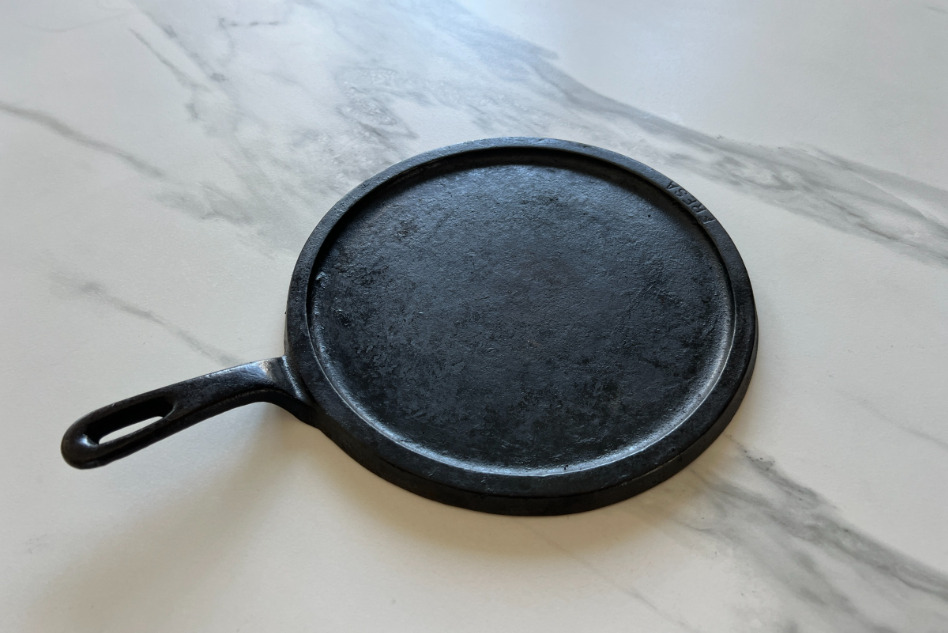
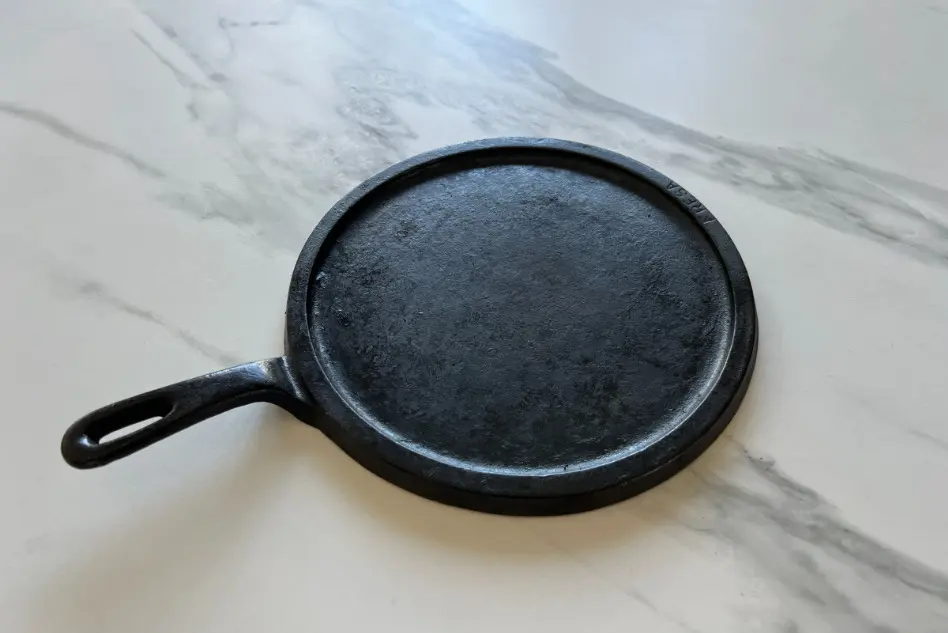
I also have a couple of small cast iron serving pans that I love. Less cumbersome, they’re genuinely useful, and I keep at least two of them in our RV.
If you take good care of your cast iron — whether it’s a pan, a casserole, a skillet, a comal, or a dutch oven — you’ll be able to put those puppies in your will. They will absolutely outlast you.
❓ Frequently Asked Questions
Can I use soap on cast iron?
A small amount of mild soap won’t ruin modern seasoning, but I skip it and rely on heat, salt, and a stiff brush instead — it’s simply the habit I trust most.
Why does my cast iron feel sticky after seasoning?
It almost always means too much oil was used before heating. Wipe off the excess, heat the pan again for a few minutes, and it should smooth out.
Can I cook tomato sauce or other acidic food in cast iron?
You can once the pan has years of seasoning behind it. On a newer pan, acidic ingredients can react with the metal and leave a metallic taste, so I wait.
How do I get rust off cast iron?
Scrub the rust spot with coarse salt and a sponge, dry the pan completely, and run it through a round of oil seasoning as described above.
Can I use cast iron directly on a campfire or in the coals?
Yes — that’s exactly what it’s built for. Keep it over a bed of coals rather than active flame when you can, and check on it more often since you can’t set an exact temperature the way you can on a BBQ or in an oven.
Is cast iron oven-safe?
Yes, cast iron goes straight from the stovetop or the fire into the oven without issue, which is part of why I like it so much for finishing a dish or baking bread.
Why is cast iron cookware so heavy?
It’s solid cast metal, which is exactly what gives it the heat retention and durability that make the weight worth it, in my opinion.
Do I need to season a brand-new pan before I use it?
Most commercial cast iron cookware comes pre-oiled and ready to use, but an extra round of seasoning before the first cook never hurts and builds a bit more protection.
Can I use metal utensils on cast iron?
Yes. Unlike a nonstick pan, cast iron can handle metal spatulas and tongs without getting damaged.
How long does cast iron cookware actually last?
With basic care — dry it, oil it, avoid soap-soaking and steel wool — cast iron cookware can genuinely last for generations.