
Here’s the truth: how to build a fire is the one skill that decides whether your night by the coals goes well, or ends with you fanning damp smoke into your own eyes for twenty minutes. It isn’t complicated, but it isn’t intuitive either — most people stack too much wood too soon and smother the one thing a fire needs most: air. I’ve built fires in gravel pits with no wind cover and in stone rings six feet across, and the method underneath never changes. This guide walks you through it step by step: what you actually need, how to lay it, how to light it, and how to read it once it’s going — plus the mistakes that kill a fire before it ever catches.

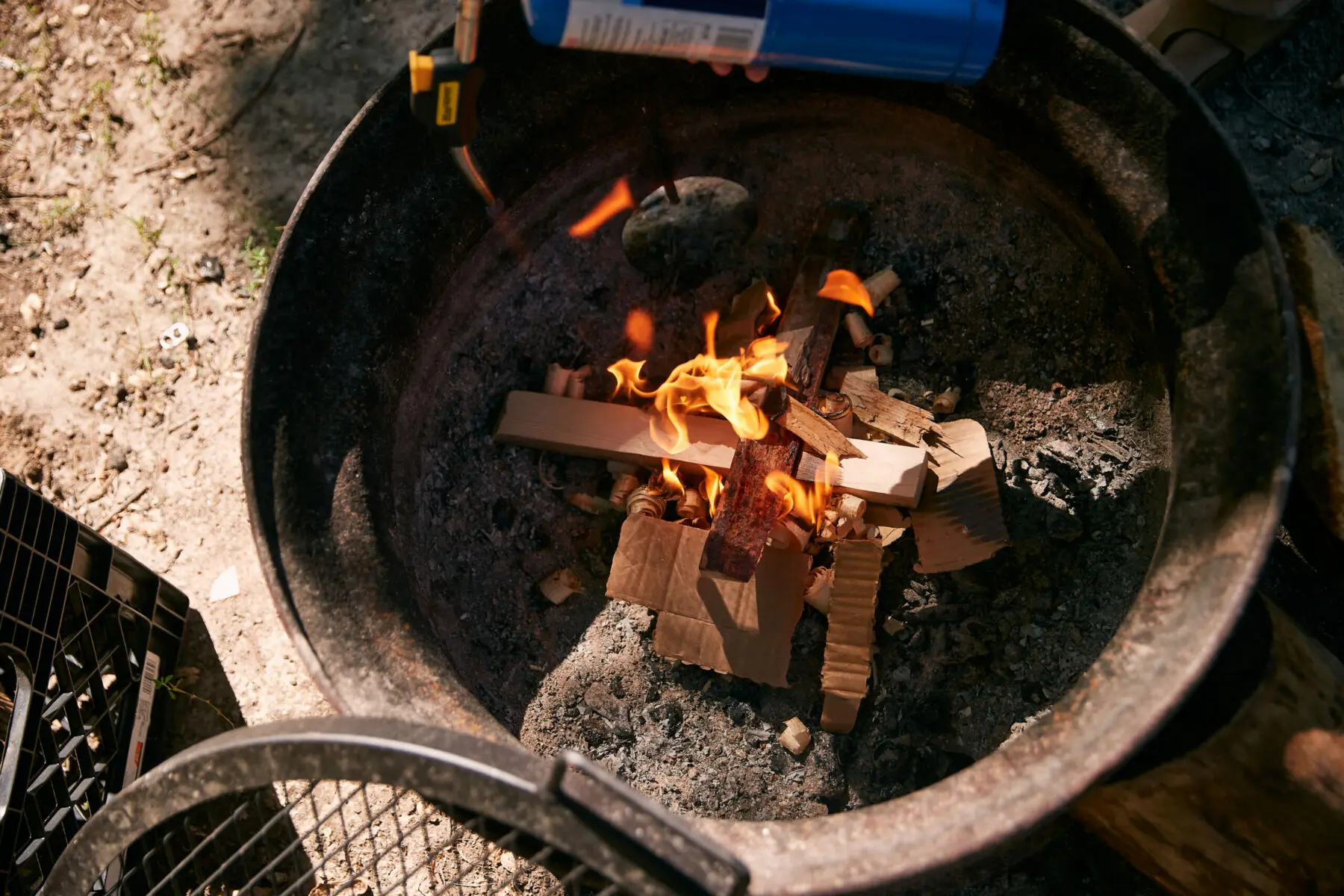
🔥 What You Actually Need to Build a Fire
You don’t need much. Three kinds of fuel, sorted by size, and something to light them with.
- Tinder — dry, thin, catches instantly: dead grass, birch bark, dryer lint, a handful of twigs no thicker than a matchstick.
- Kindling — pencil to finger-thick sticks that carry the flame from tinder to real wood.
- Fuel wood — your actual logs, split if you can, seasoned. Light-colored, cracked ends, and a hollow knock when you tap two pieces together; wet wood sounds dull and feels heavy for its size.
Add a long lighter or waterproof matches, something to contain the fire (a ring of stones, a metal fire pit, or your grill’s firebox), and water or dirt within reach before you strike anything. That last part isn’t optional — more on it in the safety section below.
🪵 Picking the Right Wood
Softwoods like pine and cedar catch fast and burn hot, which makes them great for kindling but rough for cooking — they throw sparks and coat everything in resin-heavy smoke. Hardwoods (oak, maple, hickory, fruitwoods) take longer to catch but burn down into the dense, long-lasting coals you actually want under a pan or a grate. If you’re building a fire to cook over later, start it with softwood kindling and feed it hardwood once it’s established: an easy light now, good coals later. I go into wood selection in a lot more depth, species by species, in The Best Wood for Cooking Over an Open Fire.
⛺ Choosing and Preparing Your Spot
Pick flat, open ground at least ten feet from tents, low branches, dry grass, or anything else that burns. Clear a circle down to bare dirt or sand — leaves and pine needles under your fire ring will smoulder and spread under the surface long after you think you’ve put things out. If you’re at a campsite with an existing fire ring, use it; a fresh scar on the ground is one more thing the next person has to deal with. Check the wind before you commit to a spot: you want smoke blowing away from your tent and your food prep, not into them.
🏗️ Two Structures That Never Fail: Teepee and Log Cabin
Once your tinder and kindling are ready, how you stack them decides whether the fire catches on the first try.
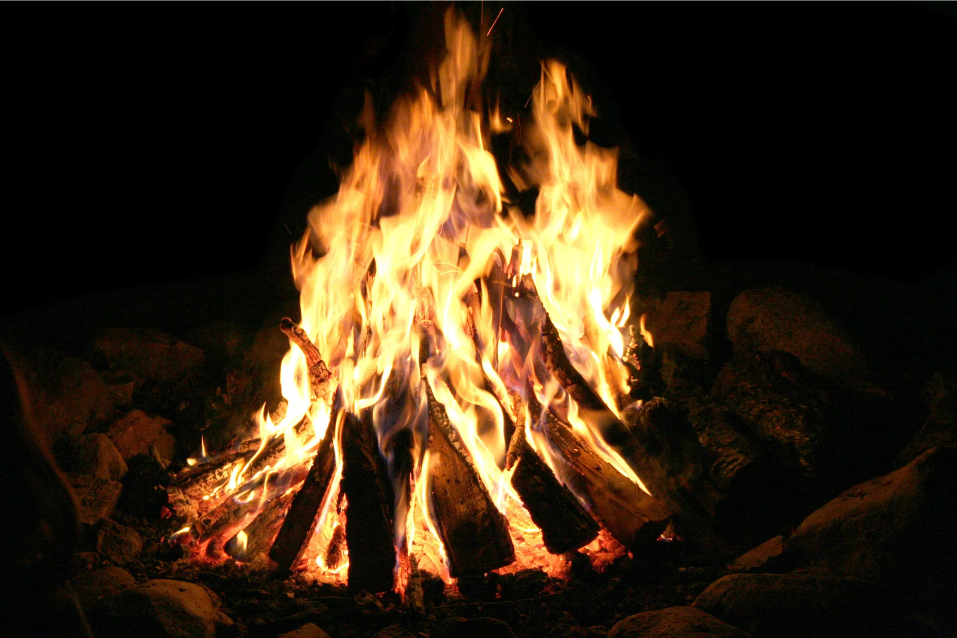
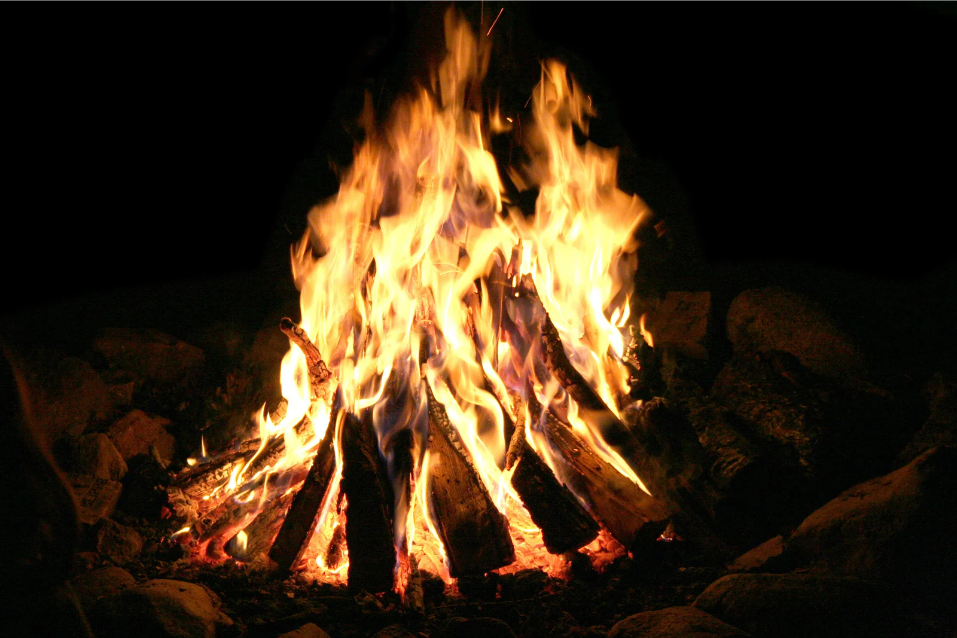
The teepee is the fastest: lean your kindling into a cone over a tinder bundle, leaving a gap on the windward side to light through. As it burns, the structure collapses inward and feeds itself — simple, but you have to rebuild it once it falls if you want to add fuel wood on top.

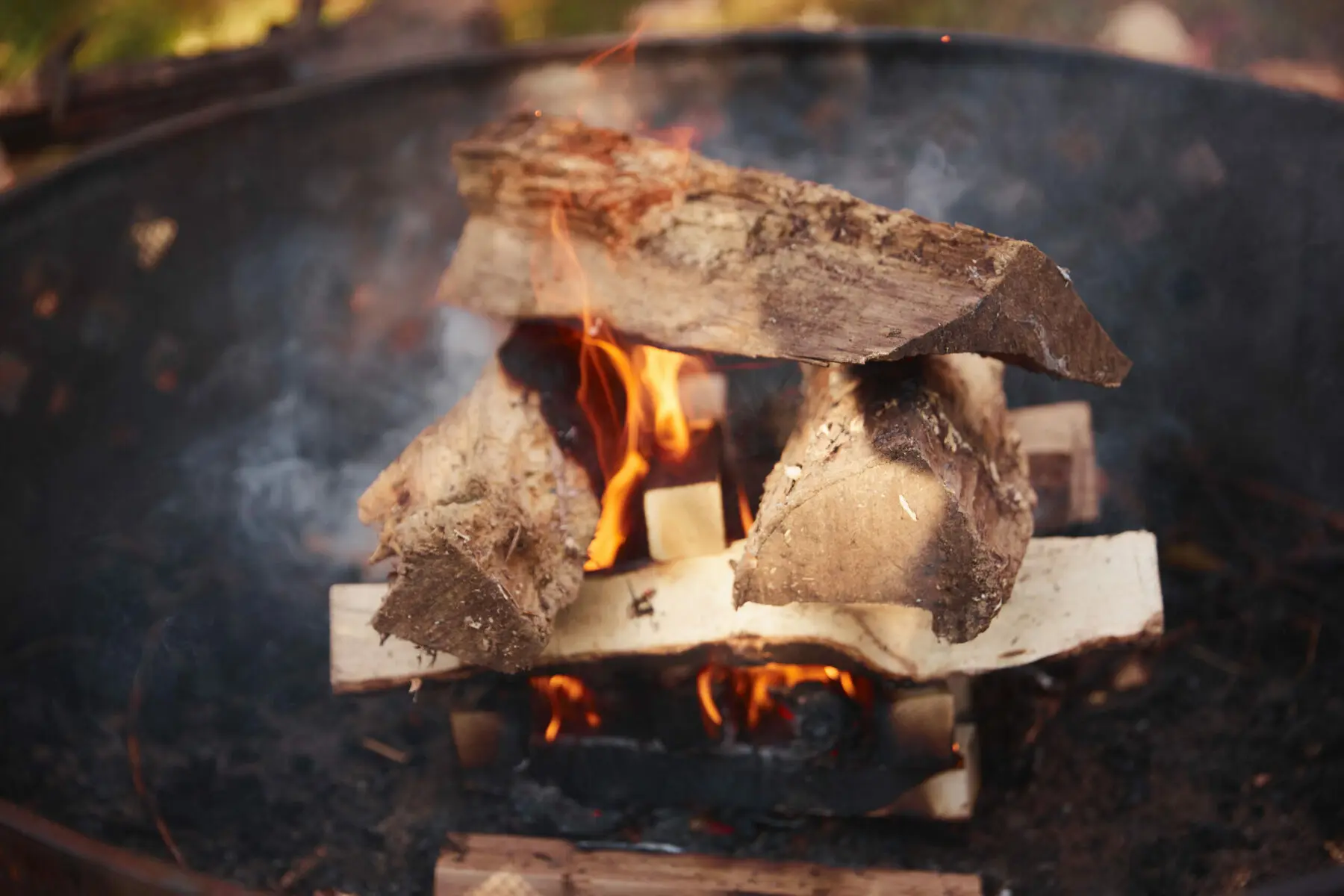
The log cabin (or cross stack) is slower to light but more stable: lay two pieces of kindling parallel, then two more across them, log-cabin style, with tinder in the middle. It burns longer without tending and holds a pan or grate steady once you’re ready to cook. I use a teepee to get things going, then rebuild into a loose cross stack once I have coals, so I’ve always got a flat, sturdy structure to cook over.
💨 Lighting It: Airflow Is Everything
A fire is really just wood, heat, and oxygen meeting in the right proportions — take any one away and it goes out. Most fires that won’t catch aren’t a fuel problem, they’re an air problem: the wood is stacked too tight, or lit from the top instead of underneath.

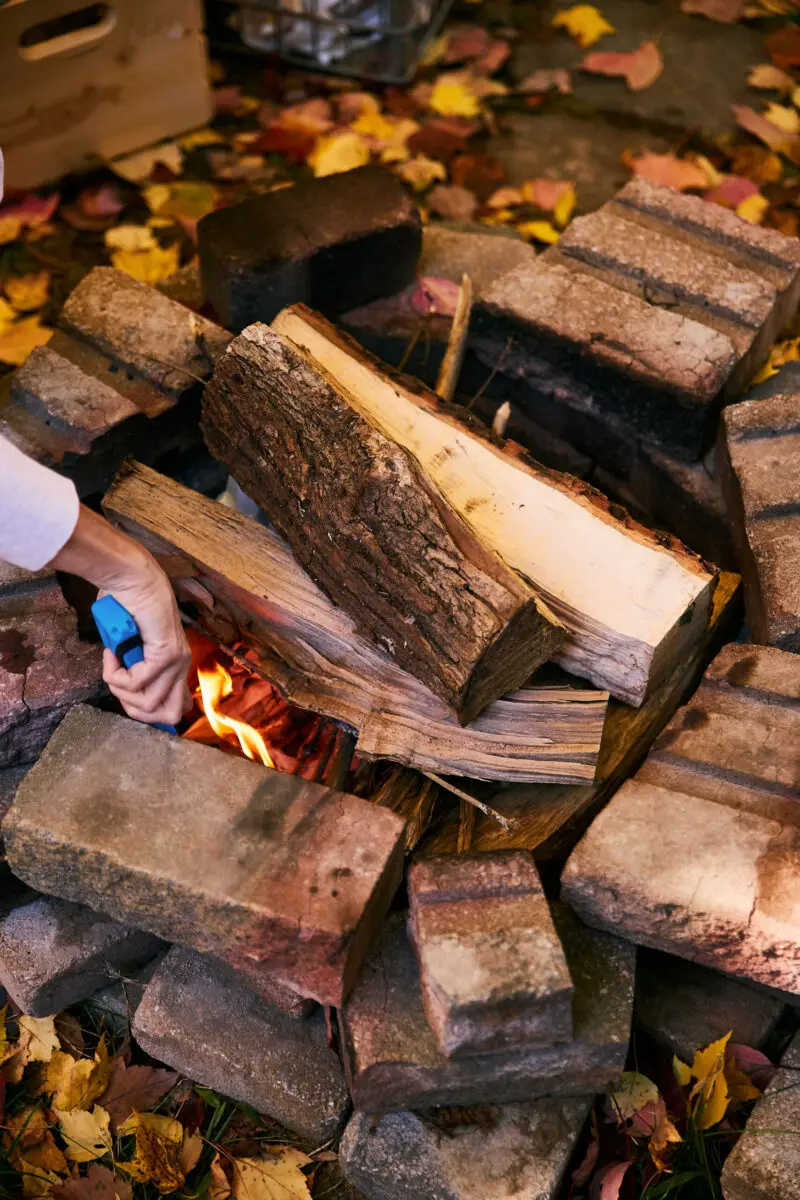
Light your tinder at the base, on the side the wind is coming from, and let the draft pull the flame up and through the kindling. If it’s struggling, don’t add more wood — get down low and blow gently at the base, or fan it with a paper plate. That extra oxygen is usually the only thing missing.
👀 Reading Your Fire: Flames vs. Coals
Flames are for boiling water and getting things started; they’re too unpredictable and too hot on the surface for most actual cooking. Coals — that steady, glowing, ash-covered bed with no visible flame — are what you want under a steak, a pan, or a grate. You’ll know they’re ready when the wood has stopped popping and cracking, the flames have died down to almost nothing, and you can hold your hand at grate height for a full three seconds before it gets uncomfortable. Until then, there’s nothing useful to do but crack open the Pschitt and watch the flames settle.
Different setups call for different depths of coals, and I break down exactly which method suits which kind of cooking in 2 Fire Cooking Methods — worth a read before your next cook.
⚠️ Mistakes That Kill a Fire Before It Starts
- Wet or green wood. If it hisses or smokes more than it burns, it’s not ready — set it near (not in) the fire to dry and use something else in the meantime.
- Wood stacked too tight. No airflow, no fire. Leave gaps between pieces.
- Too much kindling, not enough tinder. Kindling needs a real flame to catch from, not a spark.
- Lighting from the top. Fire climbs; always start at the bottom.
- Giving up too early. A teepee that collapses in the first thirty seconds isn’t a failure — rebuild it with slightly smaller kindling and try again.
🧯 Safety First, Every Time
Never leave a fire unattended, even for a few minutes — a gust of wind and a dry patch of grass is all it takes. Keep water or dirt within arm’s reach the entire time you’re burning, not just at the end of the night. When you’re done, put it out properly: I wrote a full walkthrough on that in How to Put Out Your Campfire — drown it, stir it, feel it, every time, no exceptions.
For the broader rules — burn bans, safe distances, what to do if a fire escapes your ring — the National Park Service’s campfire safety guidance is worth bookmarking before your next trip.
🏠 No Fire Pit? Your Equivalents
Not everyone has a fire ring in the backyard, and that’s fine — the same fundamentals apply everywhere fire meets fuel. In a backyard BBQ or grill, build the same teepee or cross stack directly in the firebox, or skip straight to charcoal if you’re not chasing wood smoke. In a wood-fired oven, build a smaller, hotter version of the same log cabin structure directly on the oven floor, then push the coals to the side once the dome is hot and cook in the residual heat. A fireplace or hearth works the same way, just indoors and on a grate — make sure the damper is fully open before you light anything. Whatever the container, the fire itself doesn’t know the difference. My Cast Iron Cookware guide covers the gear that moves easily between all three setups, if you’re building out your kit.
❓ Frequently Asked Questions
What’s the fastest way to build a fire?
A teepee structure with dry tinder, lit from the base on the windward side. With good tinder it usually catches in under two minutes.
How much wood do I actually need?
Roughly a grocery-bag-sized bundle of tinder and kindling, plus four to six pieces of split fuel wood for a couple of hours of burning. More if you’re cooking over it all evening.
Can I build a fire with wet wood?
Not reliably. Split it to expose the drier interior and prop the pieces near the fire to dry while you burn drier wood first.
Why does my fire keep going out?
Almost always airflow. The wood is stacked too tight or lit from the top. Restack looser and light from the bottom again.
Is it safe to use newspaper as tinder?
Yes, crumpled newspaper works fine as tinder, though it burns fast, so have your kindling ready to add the moment it catches.
How long until I have cooking coals?
Usually 30 to 45 minutes from a lit teepee to a steady, ash-covered bed of coals, depending on the wood species and how much you built.
Do I need different wood for building versus cooking?
Softwood kindling gets the fire going fastest. Hardwood is what you want for a long, even bed of coals to actually cook over.
What should I do if my fire won’t catch?
Stop adding wood, clear it back down to tinder and kindling, add fresh dry tinder, and light from the base again with better airflow.
Is it okay to build a fire directly on grass?
No. Clear down to bare dirt or sand first, and use a designated fire ring if you’re at a campsite that has one.