
Did you know there’s a real best wood for cooking, and worst ones too? Over a fire you want hardwood, not that soft campsite bundle sold in a mesh bag at the gas station. Depending on the species you burn, you get a different heat, a different burn time, and a different taste on your food.
🔥 Campfires Can Be So Much More
A camping trip doesn’t seem complete if you don’t come home with hair and clothes smelling of wood smoke. Fire is more than a tool, it’s a ceremony, and many of the best camping and cabin memories are those times spent together around it.
But your campfire can be used for much more than roasting marshmallows. Cooking over a wood fire has really gained in popularity in recent years — several restaurants and chefs now specialize in it, and it gives a taste no gas BBQ can match. I fundamentally believe cooking over the campfire brings us back to something essential: hypnotic, comforting, fragrant, it touches the five senses. And it all starts with the log you throw on.
🍳 Cooking Right on the Fire
When we started our own adventure as campers, one of the first purchases we made after the 2006 Airstream trailer was a mini Kamado Joe grill. The smallest of the series — I was more than convinced (and therefore worked very hard to convince my darling as well) that despite its weight it would be an essential device for our gourmet camping weekends.
The following summer, we sold it in the classifieds. I quickly realized it was nonsense to build perfect embers in the kamado while the campfire was already going at full speed. So I bought a grate, some utensils, cast iron skillets and casseroles, and started cooking directly on the campfire instead.
Now, many years later, we have arranged our backyard to look like a campground. We have a fire pit with a quad-pod Fire Bridge hanging over it, a Kudu grill, a Forno Venetzia wood burning pizza oven and a Solo stove. None of it matters, though, if the wood underneath is wrong — and you don’t need any of that fancy gear to start. A sturdy grate, long tongs, welding gloves and a couple of pieces of cast iron cookware will cover most meals. Cast iron loves the uneven, radiant heat of a wood fire in a way thin stainless steel never will.
🪓 Hardwood vs. Softwood: What Actually Burns Hot
The first year we went camping, we were seasonal on a campground in the Quebec Laurentians. The nice gentleman who sold us our cord of wood, seeing me cooking directly on my fire, said: “Your fire would be a lot hotter if you had bought some hardwood instead of camping wood!” Sigh. I had no idea there were two categories of wood: wood that heats, and wood that just… burns.
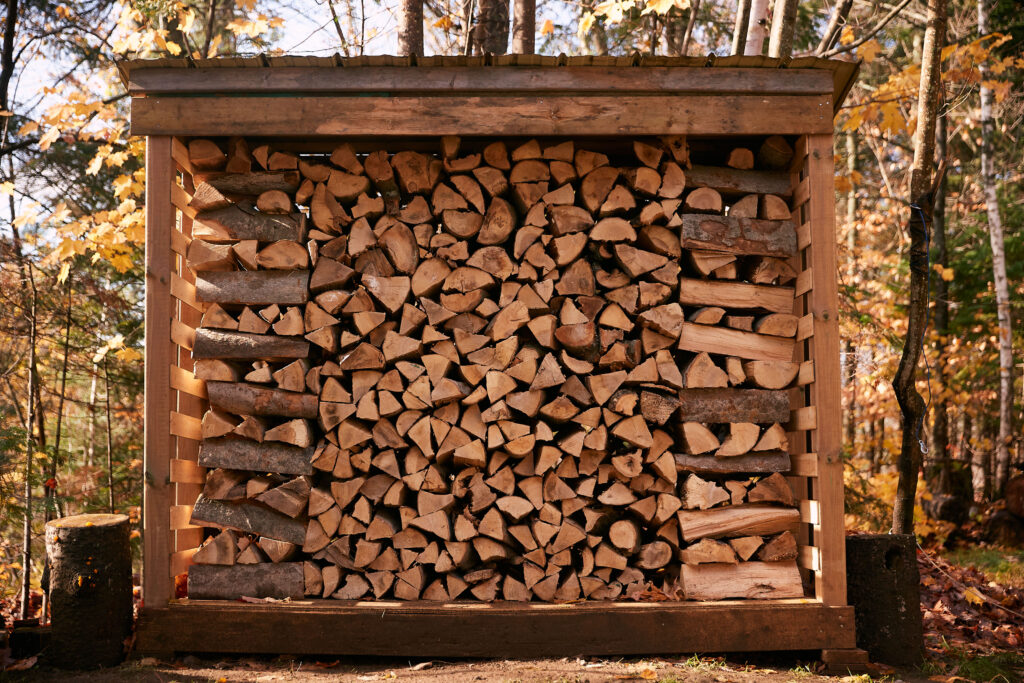
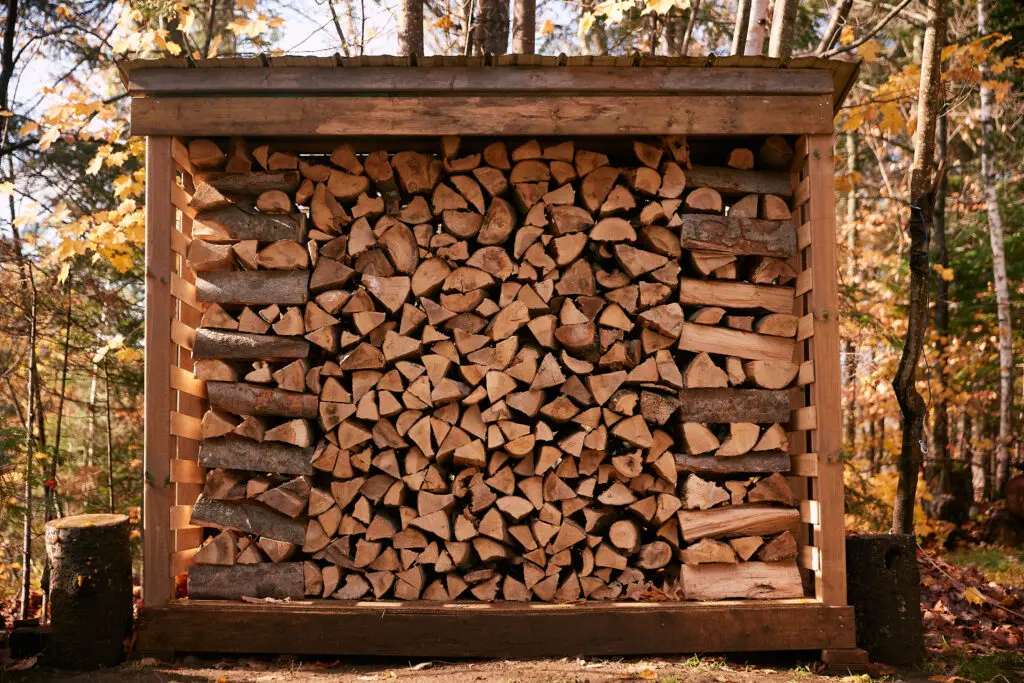
If you see classified ads that say “camping wood,” that’s wood for show and marshmallows — usually a mix of whatever softwood was cheap to cut. Ideally, look for firewood sold specifically as hardwood. Hardwoods like oak, maple, hickory and beech are dense, so they burn slower, hotter, and leave behind long-lasting embers — exactly what you want under a skillet. Softwoods like pine, spruce, fir and cedar are full of resin: they flare up fast, pop, and coat your food (and your chimney) in sooty smoke. Great for a quick blaze, bad for dinner.
But if you have no choice, it’s better to cook slowly and take your time on camping wood than to burn through a full hardwood fire when you don’t have the experience to manage those hotter coals yet.
📊 Heat Content in Different Types of Wood
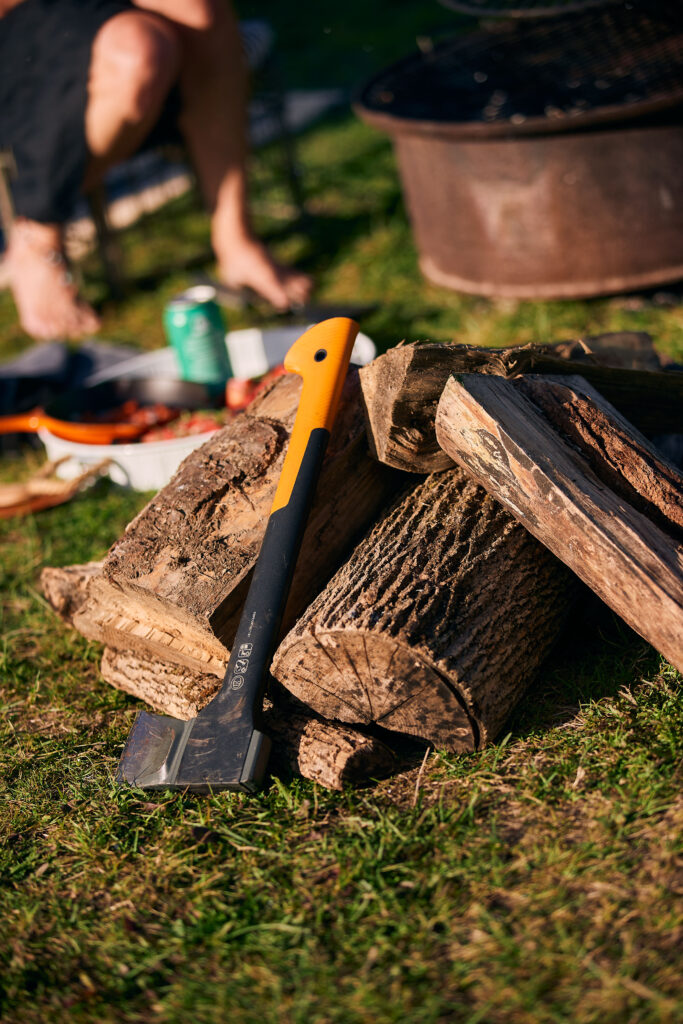
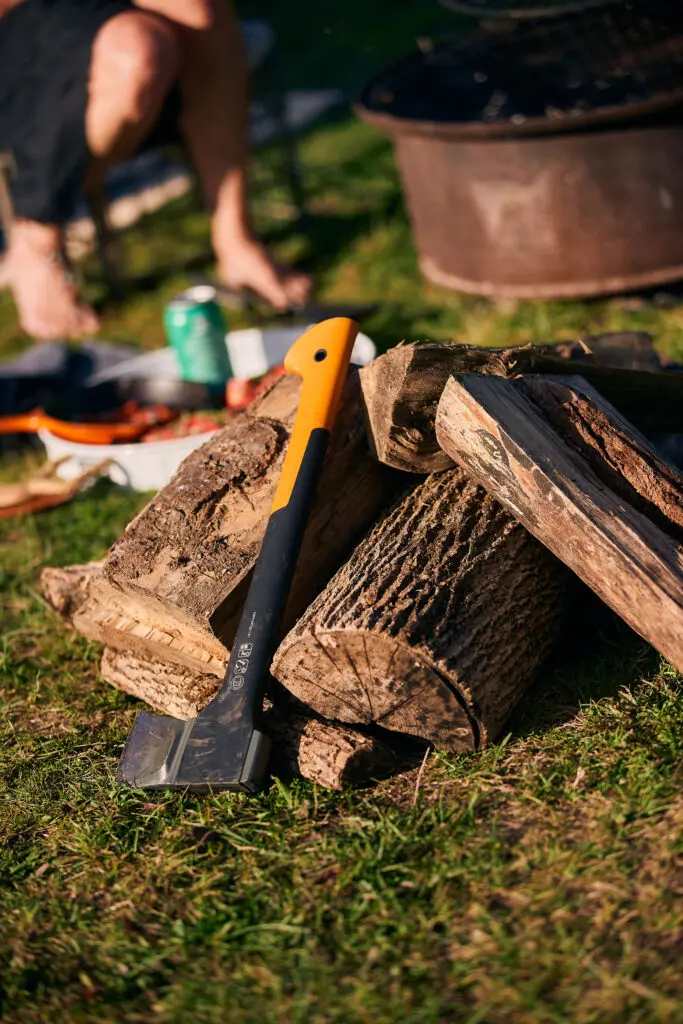
Every type of wood burns differently, and some burn hotter than others. Wood is usually compared by heat content per cord (a stacked pile 4 feet by 4 feet by 8 feet), measured in million BTUs. Here is a list of wood species and their heat index found in the eastern half of North America — the higher the number, the hotter that wood burns.
| SPECIES | HEAT PER CORD (Million BTUs) |
| HIGH HEAT | |
| White oak | 31 |
| Shagbark hickory | 31 |
| Apple tree | 30 |
| Bitternut hickory | 29 |
| Sugar Maple | 29 |
| American beech | 28 |
| Red oak | 27 |
| Yellow birch | 26 |
| White ash | 25 |
| MEDIUM HEAT | |
| American elm | 24 |
| Red maple | 24 |
| Black cherry | 24 |
| Larch | 24 |
| Paper birch | 23 |
| Gray birch | 23 |
| Black ash | 23 |
| Silver maple | 22 |
| LOW HEAT | |
| Red spruce | 19 |
| Aspen | 18 |
| Hemlock | 18 |
| Butternut | 17 |
| Balsam poplar | 17 |
| Basswood | 17 |
| White pine | 17 |
| Western white cedar | 16 |
| White spruce | 16 |
| Balsam fir | 16 |
Notice how the low-heat column is almost entirely softwood: spruce, pine, cedar, fir. That’s not a coincidence — it’s exactly the wood I’m telling you to keep out of your cooking fire.
🍁 Maple Is My Wood of Choice
In Quebec, hardwoods such as maple, yellow birch (or cherry), paper birch, beech, elm and oak are the wood species of choice for cooking on the campfire.
At home — because we have a fire pit in the back yard, even at home — I prefer maple, a local, very hard wood. It takes longer to catch, but the embers have an intensity that makes your fire look like something out of a Western. Not to mention the aroma maple gives to a meal. That wait is exactly when I open the Pschitt — there’s nothing to do until the wood catches up.
I get my maple from a company that oven-dries the wood, so it’s already perfect for cooking use straight off the pallet, no seasoning wait required.
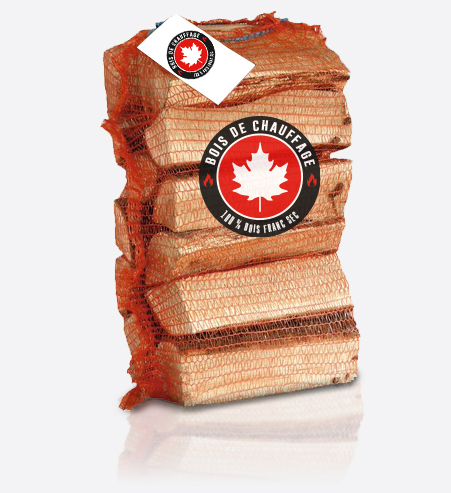
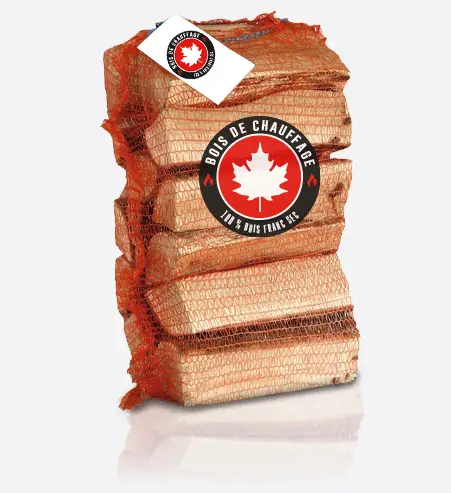
In the southern United States, cooks use hickory and mesquite, species that seem exotic to us up north — but that’s simply what’s abundant there. Here, our abundance of maple would be the envy of some of America’s greatest pitmasters. Try it yourself on a campfire steak or under a pan of fire grilled fish and taste the difference proper hardwood makes.
👀 Reading the Embers: Visual Cues Your Fire Is Ready
Good wood is only half the job — you also need to wait for the right moment. A roaring flame looks impressive but is the worst thing to cook over: inconsistent, and the easiest way to set your eyebrows on fire. Here’s what I look for:
- No active flame — you want glowing coals, not fire licking up around your pan
- A gray ash coating — hardwood embers develop a pale gray skin over a bright orange core once they’re ready
- Even, steady glow — the coals pulse orange-red rather than flaring and dying unevenly
- The hand test — hold your palm a few inches above the coals; if you can only stand it a couple of seconds, that’s a hot searing heat, if you can hold it comfortably for a slow count, that’s a gentler, longer-cooking heat
Dense hardwood like oak or maple takes longer to reach this stage than softer wood, but it holds it far longer once there — exactly why it’s worth the wait.
⚠️ Common Mistakes (and How to Stay Safe)
Most bad campfire meals — and most fire mishaps — come down to the same handful of mistakes:
- Cooking over green or wet wood — it smokes heavily instead of coaling, and gives food a bitter, acrid taste
- Cooking over softwood — resin pops, spits and coats your food and pans in soot
- Using any accelerant on a cooking fire — lighter fluid or gasoline leaves a chemical taste behind and is simply dangerous
- Walking away from an active fire or hot embers — even for “just a minute”
- Trusting your eyes over a thermometer — a good sear can hide an undercooked center, especially on thicker cuts
For meat, poultry or fish, always confirm doneness with a thermometer rather than guessing from char — the USDA’s safe minimum internal temperature chart is worth keeping near the fire pit.
🏡 No Open Fire? Home Equivalents That Work
The Fire Cook isn’t just about camping — it’s about cooking on fire in whatever form you have access to. No fire pit or campground tonight? You still have options.
On a charcoal or gas backyard BBQ, add a few chunks of the same hardwoods from the table above (oak, hickory, maple, apple) onto lit charcoal, or in a smoker box on a gas grill, for real wood flavor without building a full fire. A wood-fired oven, like the pizza oven we run in the backyard, follows the exact same hardwood-over-softwood logic, just in a smaller firebox that heats up faster.
Whichever setup you use, the two fire cooking methods — over the flame or in the embers — still apply. Now that your wood is sorted, let’s start by building a fire the right way.
❓ Frequently Asked Questions
What is the best wood for cooking over a fire?
Any dense hardwood: oak, hickory, maple, apple or beech, as shown in the heat index table above. They burn hotter, longer and cleaner than softwoods, and give food a mild, sweet smoke instead of a resinous one.
Can I use pine or other softwood to cook?
I’d avoid it for anything you’re eating. Pine, spruce, fir and cedar are resinous, so they flare, spit and coat your food and cookware in soot. Fine for a quick warm-up blaze, not for the pan.
What’s the difference between “camping wood” and firewood?
“Camping wood” in small bundles at campgrounds or gas stations is often whatever softwood was cheap — good for ambiance and marshmallows, not serious heat. Ask specifically for hardwood when buying a cord to cook on.
Do I need to season (dry) my firewood before cooking with it?
Yes. Green or wet wood smokes heavily instead of building good coals, and it can leave a bitter taste on food. Properly seasoned hardwood, or wood that’s been kiln or oven dried, lights and coals up far more reliably.
How long does hardwood take to turn into good cooking embers?
Longer than softwood — dense hardwood takes more time to catch fully. The upside is once it gets there, those embers hold heat far longer, which is what you want for a real cooking session.
Can I mix different types of wood in the same fire?
Absolutely, and I usually do. Start with a faster-catching hardwood, then add a dense species like maple or oak once you have a solid bed of embers, to keep the heat up for the whole cook.
Is maple good for smoking, or just for heat?
Both. Maple burns hot and clean, with a mild, slightly sweet smoke — part of why it’s my everyday wood. It won’t overpower delicate foods the way heavier wood like hickory or mesquite can.
What wood should I avoid completely?
Anything treated, painted or reclaimed from construction — it can release toxic fumes. Skip resinous softwoods for direct cooking, and never burn moldy or rotten wood.
Can I use wood chips or chunks on a regular BBQ instead of logs?
Yes. Add hardwood chunks straight onto lit charcoal, or use a smoker box or a foil packet with holes poked in it on a gas grill — the easiest way to get real wood flavor without building a full campfire.
How do I know my fire is hot enough to start cooking?
Look, don’t guess: you want no active flame, a gray ash coating over glowing orange coals, and a steady, even heat. The hand test in the section above will tell you whether you’ve got a hot sear or a slower, gentler heat.