

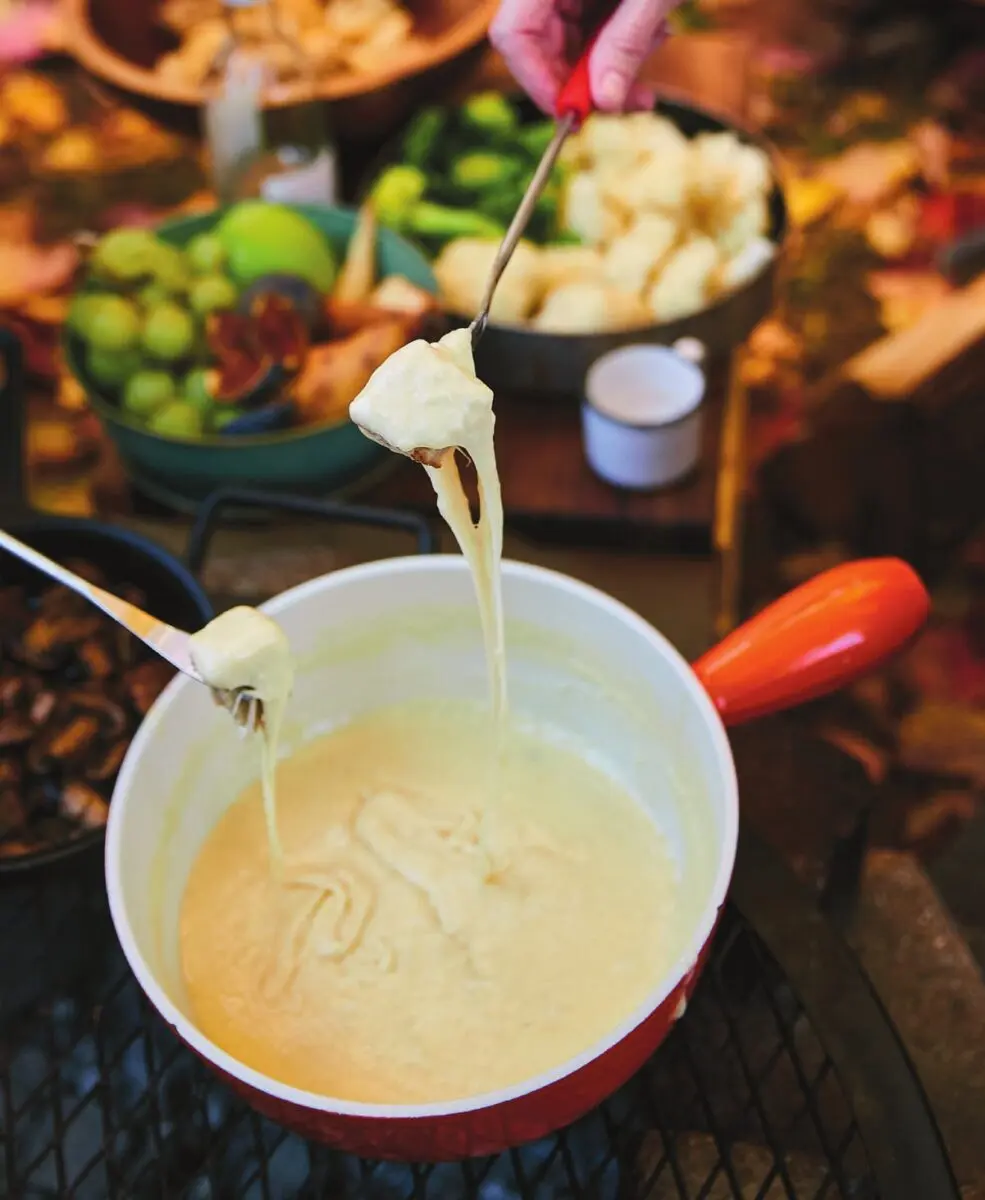
Cheese fondue is the classic chalet meal — a pot of melted cheese in the middle of the table, long forks, bread torn into cubes, everyone leaning in at once. What people forget is that the wood fire is fondue’s original stove: Alpine herders were melting the last of the season’s hard cheese over a hearth long before anyone put a fondue pot on a gas burner. It’s also the easiest fondue there is to ruin — crank the heat and silky cheese turns into a grainy, oily mess in under a minute. I learned the real technique from Swiss friends we met camping one summer, parked next to their Airstream for a memorable stretch of shared dinners. A few meals in, they handed over their family recipe, and I haven’t gone back to the boxed kind since.
Below: what actually makes real fondue different from the boxed kind, the gear you need, how to keep the heat low enough that the cheese melts instead of splitting, and what to do when it splits anyway. Then the full recipe card, and the questions I get asked most about camp fondue.
🧀 Why Cook It Over a Campfire at All
Most weekends, the fondue in our kit box is the foil-packet kind, and it’s perfectly fine — we always keep one on hand. But if you want the real thing, this is the recipe. It comes from Swiss friends we met camping, parked next to their Airstream for a stretch that turned into several shared meals — by the end, they’d handed over their family recipe and their technique for a proper moitié-moitié, half-and-half fondue. The cheese alone will cost you real money, but it’s probably the best fondue you’ll ever eat.
There’s also something fitting about cooking it over embers instead of a stove: this dish was built by people who had a hearth, a pot, and the last of their aged cheese to use up. A campfire isn’t a workaround for fondue — it’s closer to the original kitchen than the burner at home.
🧺 The Cheese: Gruyère and Vacherin Fribourgeois
The classic Swiss moitié-moitié blend is roughly 300 to 350 grams each of real Gruyère and Vacherin Fribourgeois, grated yourself — not a fondue blend from a bag. Everything else in the pot supports these two.
- Gruyère, ideally cave-aged. Not too dry — an overly aged, crumbly Gruyère won’t melt smoothly.
- Vacherin Fribourgeois. Gives half-and-half fondue its silkiness; choose one that’s neither too dry nor too old.
- Cornstarch or potato starch, one teaspoon. Keeps the cheese and wine emulsified instead of separating into curds and fat.
- Baking soda, one teaspoon. Our friends’ trick — keeps the proteins from tightening up too fast.
- No Vacherin Fribourgeois nearby? A young raclette or Emmental is the closest substitute, though slightly less silky.

🎒 Before You Leave Home
This fondue is built to be almost effortless outdoors, because the fiddly work happens at home. Grate both cheeses, toss with the cornstarch and baking soda, and seal it all in a zip-top bag. At camp, all you do is dump it in a pot and heat it — no grating by headlamp.
🔥 Heat Control: Embers, Never Flames
This is the part that decides whether your fondue turns out silky or seized. Fondue wants gentle, steady heat, and a campfire rarely gives you that by default — you have to manage it. Rake the fire down to a bed of glowing embers before you bring the pot over. If you’re unsure how low it needs to go or how to fully put it out afterward, Smokey Bear’s campfire safety guide covers both. If you can still see flame licking the sides of the pot, pull it back; direct flame scorches the cheese touching the metal before the rest has even started to melt.
About one to two hours before eating, tip the cheese mixture into the garlic-rubbed pot with the wine, nutmeg, and pepper. Stir gently until the cheese has soaked up the liquid, then let it come to room temperature before it goes over the coals — cold cheese hitting hot metal is how you get a seized, grainy fondue. Once it’s over the embers, keep it on medium-low and never walk away: stir constantly with a wooden spoon in a figure-8, not circles, so the cheese heats evenly from edge to center instead of overheating in one spot.
You’re done when it’s gone from clumpy to a smooth, pourable sauce that coats the spoon — usually ten to fifteen minutes of steady stirring. Glossy, not oily.

🍷 The Wine, the Garlic, and the Rest
Before any cheese goes in, rub the inside of the pot with a raw, whole garlic clove — it perfumes the fondue without leaving pieces behind. Use a dry, acidic white wine, nothing oaky or sweet. The acidity helps break down the cheese proteins so they melt into the liquid instead of clumping, which is a big part of why this fondue comes together so smoothly.
Don’t skip the rest, either. Letting the sealed cheese-and-starch mixture sit for an hour or two before it sees heat gives the starch time to hydrate and the cheese time to temper. Skip it and you’re fighting the recipe.
🍞 What to Dip
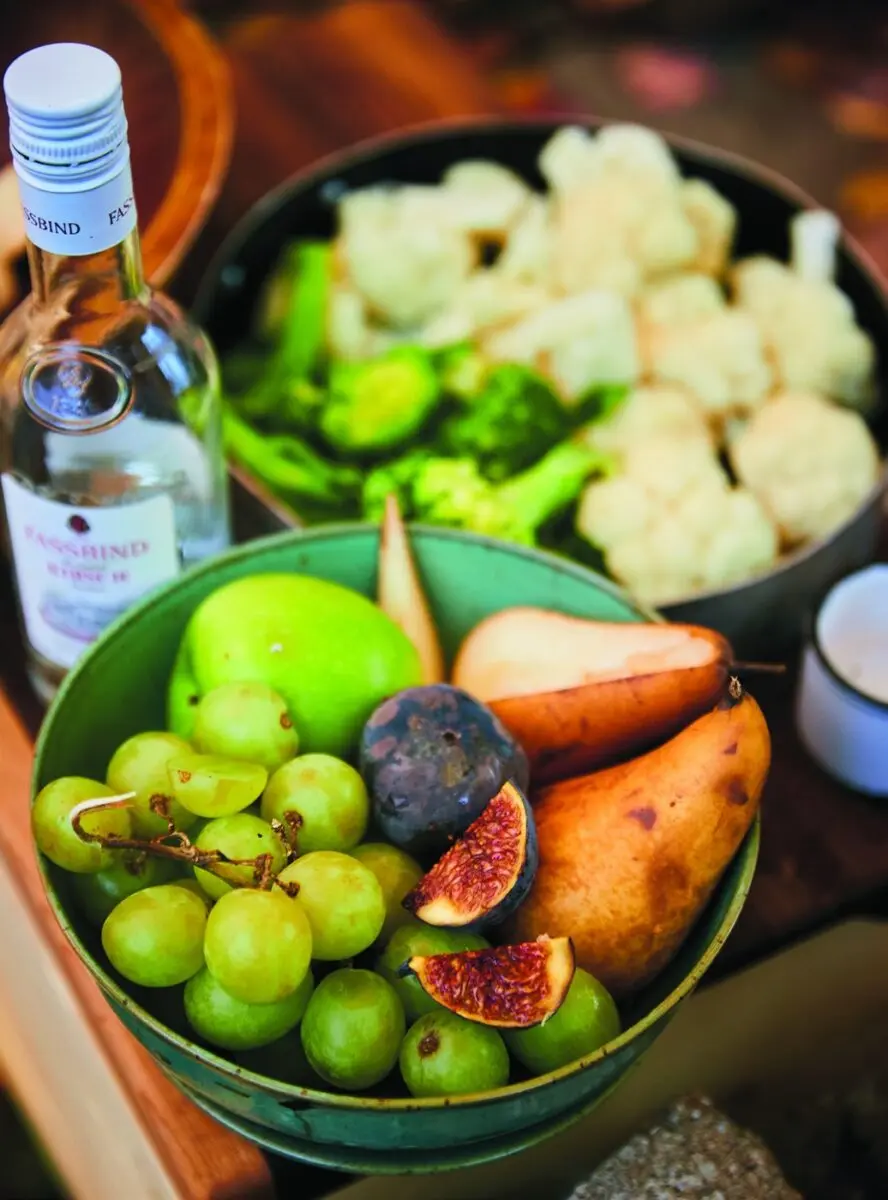
Bread is the baseline, but it isn’t the whole meal. A day-old country loaf, cut into big cubes, holds up far better on a fork than anything soft and fresh — stale bread has a crust that grips. Beyond that, I round the table out with things a little less filling, so everyone makes it through the whole pot.
- Day-old country bread, cut into large cubes.
- Seedless grapes. The acidity cuts the richness.
- Blanched cauliflower and broccoli florets. Sturdy enough to spear.
- Sautéed mushrooms, oyster especially — they hold a coating of cheese beautifully.
- Green apple wedges. Tart, crisp, a break from the bread.
🥂 Serving It Right
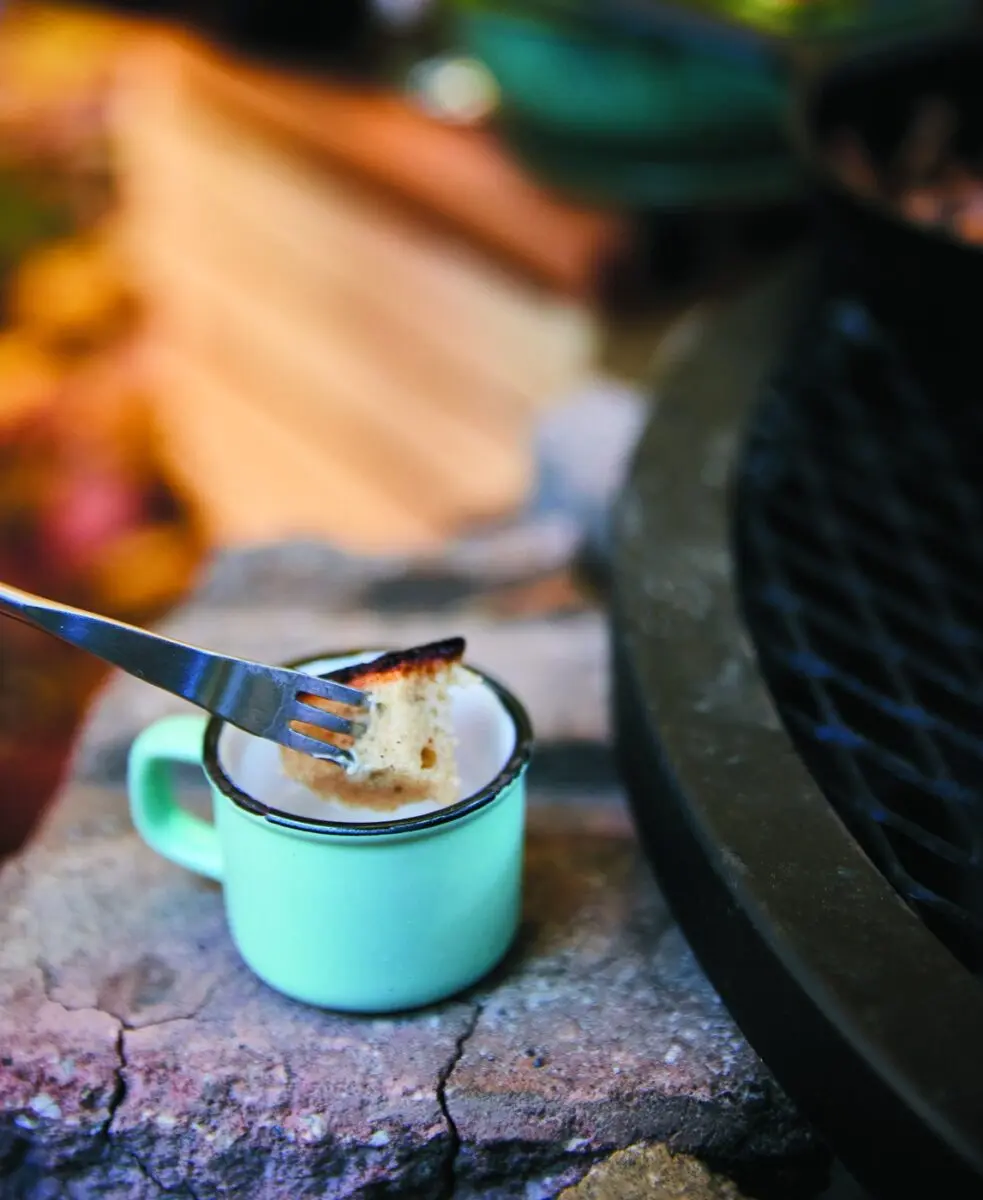
This makes enough for four as a proper dinner. Keep the pot warm at the table over low heat, and give each adult their own small ramekin of kirsch. Dip your bread cube in the kirsch first, then straight into the fondue — a small move, and once you try it you get why every Swiss household does it this way.
One more tradition, non-negotiable at our table: lose your bread cube in the pot, you owe everyone a song.
🔄 Variations
Once you’ve made it straight through once, feel free to play.
- Swap the wine for dry hard cider for a more rustic, apple-forward fondue.
- Stir in a tablespoon of Dijon mustard at the end for extra sharpness.
- Use Comté and raclette instead of Gruyère and Vacherin Fribourgeois for a nuttier profile.
- Finish with a drizzle of truffle oil if you want to be a little absurd about a campfire dinner. It’s delicious.
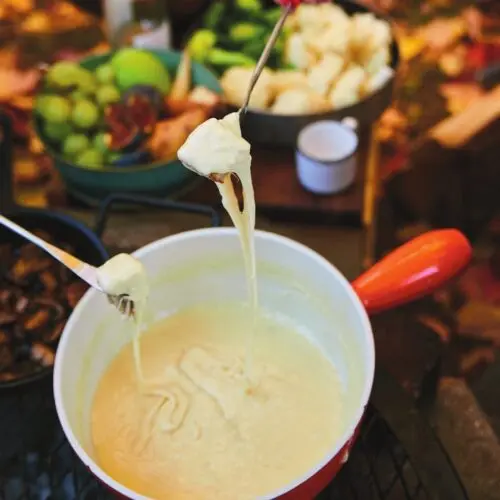
Campfire Cheese Fondue
Equipment
- 1 enameled cast iron fondue pot (caquelon)
- wooden spoon
- fondue forks or long skewers
- 1 zip-top bag for prepping the cheese mixture at home
Ingredients
For the cheese mixture (at home)
- 300-350 g Gruyère cheese real, ideally cave-aged, not too dry, grated
- 300-350 g Vacherin Fribourgeois cheese not too dry, not too old, grated — in the US, raclette or Fontina Val d’Aosta melt the same way
- 1 tsp cornstarch or potato starch
- 1 tsp baking soda
For the fondue (at the fire)
- 1 garlic clove whole, peeled
- 1/2 cup dry white wine
- Nutmeg and freshly ground black pepper to taste
- Kirsch optional, for dipping
For serving
- 1 country loaf cut into large cubes
- Seedless grapes optional
- Cauliflower and broccoli florets blanched, optional
- Mushrooms sautéed, oyster mushrooms preferred, optional
- Green apples quartered, optional
Instructions
Make it ahead
- Grate both cheeses and toss with the cornstarch (or potato starch) and baking soda, in a bowl — or a zip-top bag if you are travelling. This is your fondue mix; keep it cold until you cook.
Over the fire (start 1-2 hours ahead)
- Rub the inside of the fondue pot all over with the raw garlic clove — this is what perfumes the whole pot, no chunks of garlic needed.
- About 1 to 2 hours before you plan to eat, tip the cheese mixture into the pot along with the wine, nutmeg, and a few turns of pepper.
- Stir gently with a spoon until the cheese has soaked up the wine, then set the pot aside to come to room temperature.
Over the fire
- Set the pot over medium-low heat — embers, never open flame. Heat gently, stirring constantly with a wooden spoon in a figure-8 pattern, until the cheese melts into a smooth, glossy sauce, 10-15 minutes.
- Pour a small ramekin of kirsch for each adult at the table. Dip a cube of bread in the kirsch first, then straight into the fondue.
Notes
- Making fondue without a fondue pot
- Fixing grainy or oily fondue
- Using pre-shredded cheese
- Choosing or skipping the wine
- Whether kirsch is necessary
- Prepping the mixture further ahead
- Reheating leftover fondue
❓ Frequently Asked Questions
Can I make cheese fondue without a fondue pot?
Yes. Any small enameled cast iron pot works over embers. Keep it a bit farther from the heat than you’d think, since cast iron keeps cooking even after you pull it back.
Why did my fondue turn grainy or oily?
It got too hot too fast and the fat separated from the cheese proteins. Pull it off the heat, whisk in a teaspoon of cornstarch mixed with a splash of cold wine, and stir hard over low heat until it comes back together.
Can I use pre-shredded cheese to save time?
I wouldn’t. Bagged shredded cheese is coated in an anti-caking starch that keeps it from melting smoothly. Grate it yourself — it takes ten minutes, and you can do it the day before.
What wine should I use, and can I skip it?
A dry, acidic white wine — nothing oaky. The acidity helps the cheese melt smoothly instead of clumping. If you’d rather leave it out, dry hard cider is the best substitute, listed under variations above.
Is the kirsch necessary?
No — it’s served on the side for dipping, not stirred into the pot, so it’s easy to leave off for a kid-friendly version. It’s traditional and genuinely good, but nobody’s fondue collapses without it.
Can I prep the cheese mixture further ahead than the night before?
Yes, the sealed bag keeps well in a cooler for a day or two, which makes this an easy make-ahead recipe for the first night of a trip. Just keep it cold until you’re ready for the 1-to-2-hour rest at the fire.
How do I reheat leftover fondue?
Cooled fondue firms up in the fridge. Reheat it gently in a saucepan over low heat with a small splash of wine, stirring constantly, until it loosens back into a sauce. It’s also genuinely good cold, sliced onto bread the next morning.