

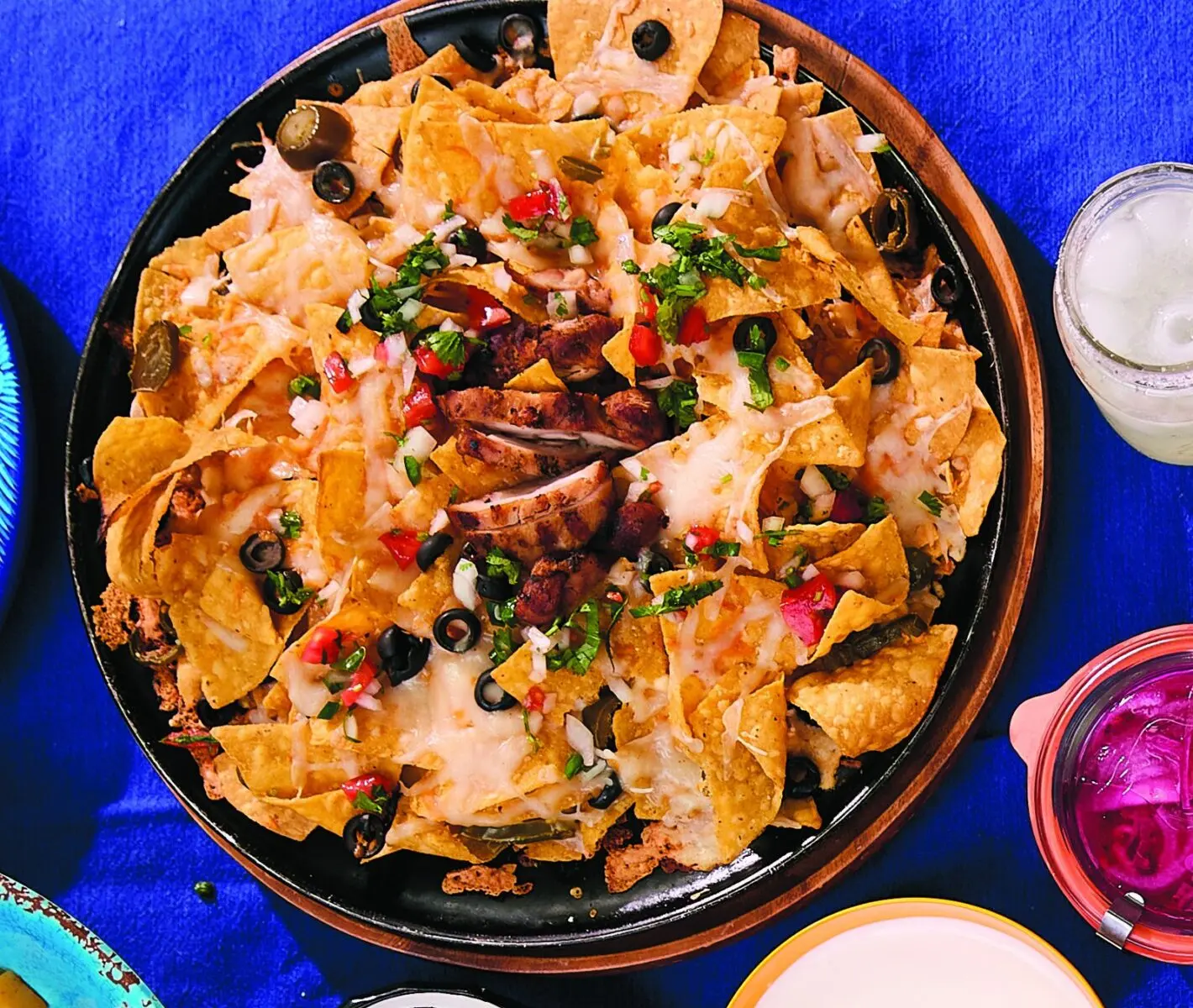
Who can resist a plate of nachos? They’re the perfect snack when a pack of hungry kids and their friends comes barreling into camp starving, and just as easily, they turn into a full meal for the whole family. I don’t think of this as a fixed recipe so much as a technique — once you understand how to build and cook the pan, you can adapt it endlessly to whatever cheese, protein, and vegetables happen to be in your cooler that day. That’s exactly the kind of recipe I like best around a fire: forgiving, fast, and built for a crowd.
In this campfire nachos guide I’ll walk you through the gear you need, the ingredients that actually hold up under fire heat, how to layer a pan so every chip gets its share of cheese, and both a grill and a true open-fire method for cooking it through. I’ll also cover which toppings go on before the heat and which ones only belong on top once the pan comes off.
🔥 Why Nachos Are My Camp Crowd-Pleaser
Nachos are one of the few things I make on the spot that pleases everyone at once — the picky eight-year-old, the hungry teenager, and the adult who just wants something that isn’t a hot dog. Set a pan of these in the middle of the table and conversation stops for a few minutes while everyone digs in. That’s the whole point.
🛠️ Gear You’ll Need
You don’t need anything fancy for this one — just something wide enough to spread the chips in a single generous layer.
- Large cast iron skillet or a foil-lined sheet pan. The wider, the better — you want surface area, not depth.
- Tongs. For handling a hot pan around coals or a grill grate.
- A torch or a spare sheet of foil. Only if you like your cheese properly gratinéed.
🧀 Ingredients and Substitutes
The nacho base barely changes recipe to recipe — everything on top is yours to decide.
- Unsalted corn tortilla chips. Totopos, or the chips sold at Latin grocery stores, are noticeably sturdier than the average bag; thin chips crack and turn to mush under a full load of toppings.
- Monterey Jack or a Tex-Mex shredded cheese blend. Melts smoothly and holds the layers together.
- Salsa, your choice. Used with a light hand — more on that below.
- A protein of your choice, cooked and still warm. Whatever you’re already planning for the meal works here.
- Vegetables of your choice, diced small. Small pieces distribute more evenly through the layers.
🥘 Building the Pan: Layer, Don’t Pile
On the foil-lined sheet pan or in the skillet, spread a first layer of chips. Top it with cheese, your protein, a little salsa, and vegetables, then add a second layer of chips and repeat with more toppings. The order matters more than people think — a flat pile with everything dumped on top means melted cheese up high and bare, dry chips underneath. Layering means every single chip gets its share.

🔥 Cooking on the Grill
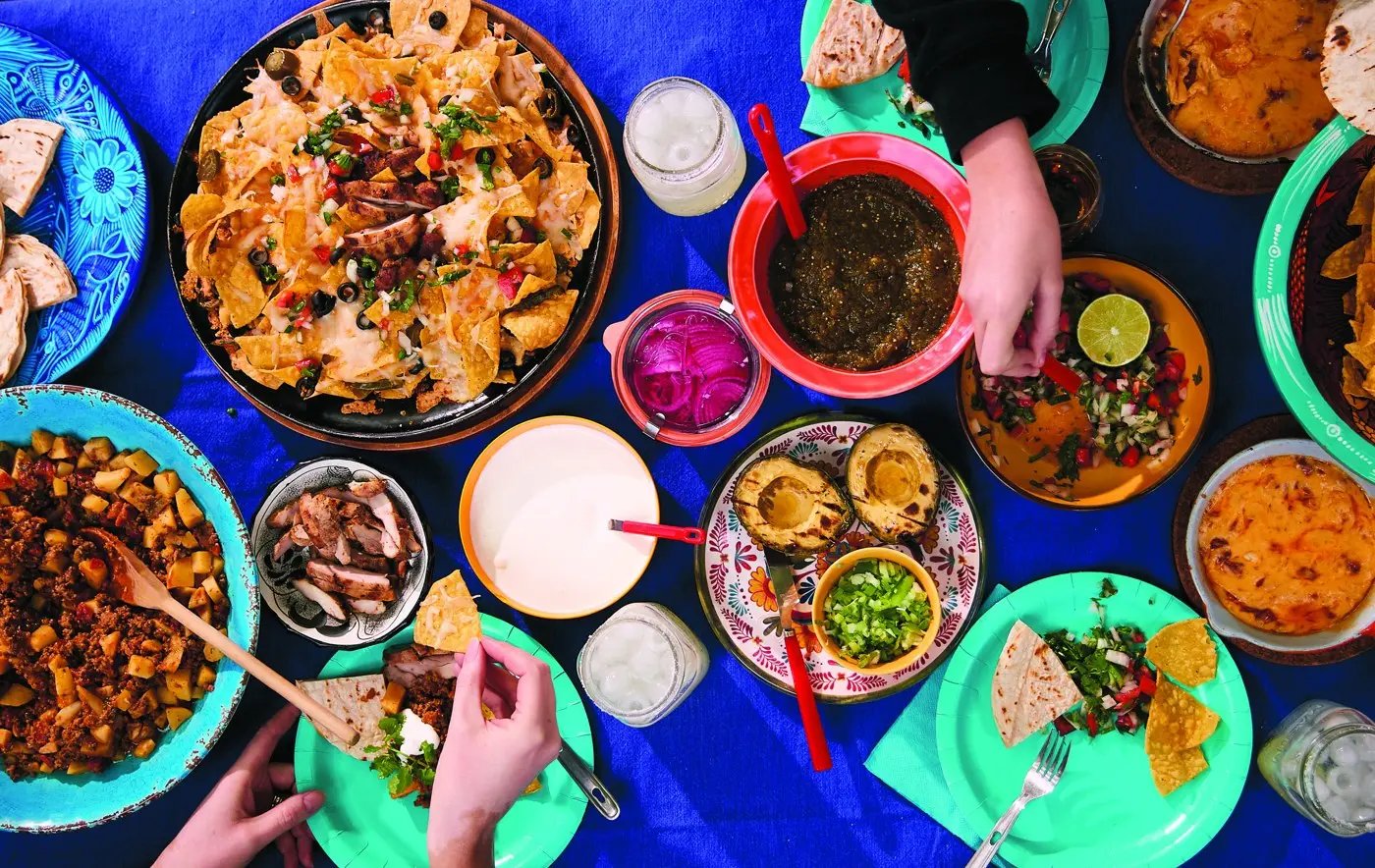
For a BBQ, set the pan on the preheated grate and close the lid. This traps enough heat to melt the cheese from above as well as below, not just from the pan itself. Keep an eye on it and rotate the pan every five minutes — grills run hotter in some spots than others, and an unwatched corner will scorch before the rest of the pan is even close to ready.
🪵 Cooking Over an Open Fire
No grill? Set the pan straight onto a bed of hot embers, or rest it on a grate positioned over the fire. Turn it occasionally so no one section takes all the heat. This is slower and a little less even than a covered grill, which is part of the charm — you have to actually watch it instead of walking away.
🌶️ Toppings and Variations
This is where the recipe becomes yours. A few directions I come back to:
- Black beans and corn. Vegetarian heft without needing a meat substitute.
- Shredded chicken or seasoned ground beef. For a more substantial, dinner-worthy version — just cook it to a safe internal temperature before it goes on the nachos.
- Pickled jalapeños. Heat that doesn’t fade the way fresh chile can.
- Chopped tomato and avocado. Added after cooking, for freshness and cool contrast.
- A drizzle of crema and a squeeze of lime. Right before serving.
- A small spoon of refried beans on each layer. Adds richness and helps hold everything together.
🍽️ Serving and Leftovers
This makes enough for four as an appetizer, or two as a full meal — adjust the chip-to-topping ratio if you’re feeding a hungrier crowd. Serve it straight from the pan, set in the middle of the table or the tailgate, and let everyone dig in with their own fork. Bring extra napkins; there’s no clean way to eat good nachos. Leftovers don’t really hold up — the chips go soft in the fridge — so I’d rather build a smaller pan and go back for seconds than plan on eating this the next day.
Campfire Nachos
Equipment
- 1 large cast iron skillet or foil-lined sheet pan
- 1 tongs
Ingredients
For the nachos
- 1 bag (300-350 g) unsalted corn tortilla chips totopos or chips from a Latin grocery store hold up best
- 250-300 g Monterey Jack or Tex-Mex-style shredded cheese
- 1 jar salsa, your choice use sparingly
Add your own
- protein of your choice cooked and warm — see suggestions below
- vegetables of your choice diced — see suggestions below
Instructions
Build the pan
- On a foil-lined sheet pan or in a very large cast iron skillet, spread a layer of tortilla chips.
- Top with cheese, your protein, a little salsa (go easy — too much and the nachos turn soggy), and vegetables.
- Add a second layer of chips and repeat with more toppings.
Cook on the grill
- Set the pan on the preheated grill grate and close the lid — or cover the pan with foil if your grill has no lid.
- Watch closely and rotate the pan every 5 minutes so one side doesn’t scorch.
Or cook over an open fire
- Set the pan directly on the embers, or on a grate over the fire, turning it from time to time so the heat stays even.
Notes
- Making it without a cast iron skillet
- Best cheese for melting on nachos
- Stopping nachos from turning soggy
- Cooking it on a gas grill
- Which toppings go on before or after
- Making it vegetarian
- How many it serves
❓ Frequently Asked Questions
Can I make campfire nachos without a cast iron skillet?
Yes — a foil-lined sheet pan works just as well, and it’s often easier to fit on a grill grate. What matters most is width: you want the chips spread thin, not stacked deep.
What’s the best cheese for melting on nachos?
Monterey Jack or a Tex-Mex shredded blend melts the most evenly. Pre-shredded “Mexican blend” bags with anti-caking coatings can melt unevenly, so shredding your own block cheese gives smoother results if you have the time.
How do I stop my nachos from turning soggy?
Go light on the salsa, and layer instead of piling everything on top at once. Adding wet toppings like fresh salsa, sour cream, or guacamole only after the pan comes off the heat helps a lot too.
Can I cook this on a gas grill instead of a campfire?
Absolutely. Preheat the grill, set the pan on the grate, and close the lid so heat surrounds the pan. Rotate every five minutes the same way you would over coals.
Which toppings go on before cooking, and which go on after?
Anything meant to melt or warm through — cheese, salsa, cooked protein, sturdier vegetables — goes on before. Cold or delicate toppings like sour cream, guacamole, fresh herbs, and pickled onions go on only after the pan is off the heat.
Can I make campfire nachos vegetarian?
Yes — swap the protein for black beans, refried beans, or extra vegetables. The layering technique and cooking method stay exactly the same.
How many people does this recipe serve?
As written, it serves about four as a snack or appetizer, or two if you’re treating it as a full meal. It scales easily — just use a bigger pan and add another layer.